Senate Race: 13 Battlegrounds Define Midterm Stakes
With polls open, Democrats need four net seats to take the chamber while Republicans can lose only two, making 13 tight races the center of the fight.
By Olga Paredes ·
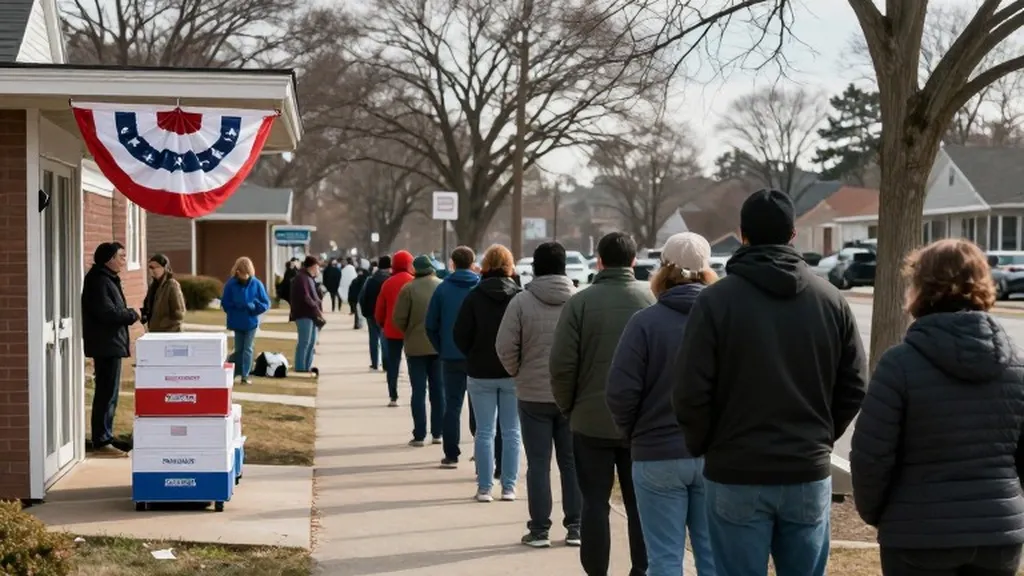
Voters across the United States are casting ballots on Tuesday, November 3, 2026, to determine the composition of the U.S. Senate. According to Ballotpedia, 35 of the 100 Senate seats are up for election. This includes 33 regular elections and two special elections to fill the remainder of the terms previously held by Marco Rubio in Florida and JD Vance in Ohio. The outcome of these races will decide which party holds the majority in the upper chamber for the next two years of President Donald Trump's second term.
Currently, Republicans hold 53 seats in the Senate, while Democrats hold 45. Two independent senators caucus with the Democrats, effectively giving the minority party 47 votes. For Democrats to claim a majority, they must achieve a net gain of four seats from the Republicans. Conversely, Republicans can afford to lose only two seats to retain control. Eleven senators are not running for reelection, including four Democrats and seven Republicans, which opens up competitive dynamics in several states.
Ballotpedia identifies 13 Senate races as battlegrounds where the outcome is not a foregone conclusion. These races span a mix of states that voted for President Trump in 2024 and states that supported former Vice President Kamala Harris. The specific states include Alaska, Florida, Georgia, Iowa, Kansas, Maine, Michigan, Montana, Nebraska, New Hampshire, North Carolina, Ohio, and Texas. The 2024 presidential margins in these states vary widely, ranging from Trump winning by 20.3 points in Nebraska to Harris winning by 6.9 points in Maine.
Recent ratings from major political analysts, as reported by the Associated Press and PBS NewsHour, highlight the uncertainty in these contests. Maine is rated as a toss-up by all four major outlets. Iowa is considered a toss-up or a lean Republican race, while Kansas is viewed as a toss-up to lean Republican. In Alaska, ratings range from toss-up to lean Democratic. Michigan is similarly rated as a toss-up to lean Democratic. Georgia is seen as a lean to likely Democratic race, suggesting that the party currently holding the seat, the Democrats, may face significant challenges from Republican challengers.
The Associated Press notes that the election is being viewed as a referendum on the current administration, with many voters citing high prices and dissatisfaction with the war with Iran as key factors. A poll conducted by AP-NORC indicates that 35% of U.S. adults approve of President Trump's job performance, while only 25% approve of his handling of the economy. Approximately 70% of respondents believe the country is heading in the wrong direction. These sentiments are driving engagement in the Senate races, where voters are weighing national issues against local candidates.
In North Carolina, former Governor Roy Cooper is challenging former Republican National Committee chair Michael Whatley for the seat left vacant by retiring Senator Thom Tillis. Tillis retired after a public clash with President Trump. In Georgia, Senator Jon Ossoff faces Republican Representative Mike Collins. The Associated Press describes this race as a critical test for the Democrats in a state that Trump won by a narrow margin in 2024. In Ohio, former Senator Sherrod Brown is running against incumbent Senator Jon Husted in a special election to finish the term.
Michigan presents another key contest, with Republican former Representative Mike Rogers facing Democrat Abdul El-Sayed. On Sunday, El-Sayed's former primary opponent, Haley Stevens, endorsed Rogers, potentially shifting the dynamics of the campaign. In Texas, Republican Attorney General Ken Paxton, whom President Trump backed over incumbent Senator John Cornyn in the primary, is running against Democrat James Talarico. The Associated Press notes that the Trump administration filed a lawsuit in Alaska related to the certification of the Senate result, adding a layer of legal scrutiny to the process.
Maine stands out as a particularly competitive state, where Senator Susan Collins faces Democratic former state Senate President Troy Jackson. The Associated Press reports that economic strain and tariffs have made the state more competitive, turning it into a true toss-up. In New Hampshire, Democratic Representative Chris Pappas is challenging former Republican Senator John E. Sununu for the seat of retiring Senator Jeanne Shaheen. These races illustrate how shifting political landscapes and economic concerns are influencing voter choices in states that have historically leaned one way or the other.
Kansas has emerged as a central focus for the fight over Senate control, despite being a reliably Republican state. The Associated Press notes that the state's competitive nature has drawn significant attention from both parties. In Alaska, the race involves incumbent Senator Dan Sullivan, who is running for reelection in a state that Trump won by 13.1 points in 2024. The presence of special elections in Florida and Ohio adds complexity, as these races are not tied to a specific incumbent's popularity in the same way regular elections are.
The Associated Press describes the mood among political parties as one of cautious optimism for Democrats and bracing preparation for Republicans. Republicans are fighting to hold the Senate while expecting potential losses in the House. Democratic leaders, including Rep. Suzan DelBene, the chair of the Democratic Congressional Campaign Committee, have stated that the American people are angry and want change. Conversely, Republican National Committee Chairman Joe Gruters emphasized that everything depends on turnout, asserting that if Republicans turn out their voters, they will win.
Voters are also considering the broader implications of the election results. If Democrats win even one chamber of Congress, investigations and possible impeachment proceedings are likely to increase. House Democratic Leader Hakeem Jeffries has outlined a 100-day agenda focused on the cost of living and oversight if he becomes speaker. For Republicans, a strong performance would help counter the typical midterm pattern where the president's party loses seats. The results of these 13 battleground races will ultimately determine the balance of power in the Senate as it prepares to begin its new term on January 3, 2027.