House Control Hinges on 46 Toss-Up Districts and Three-Seat Margin
With all 435 House seats up, Republicans can lose only two districts to retain the majority, while Democrats need a net gain of three to flip the chamber.
By Olga Paredes ·
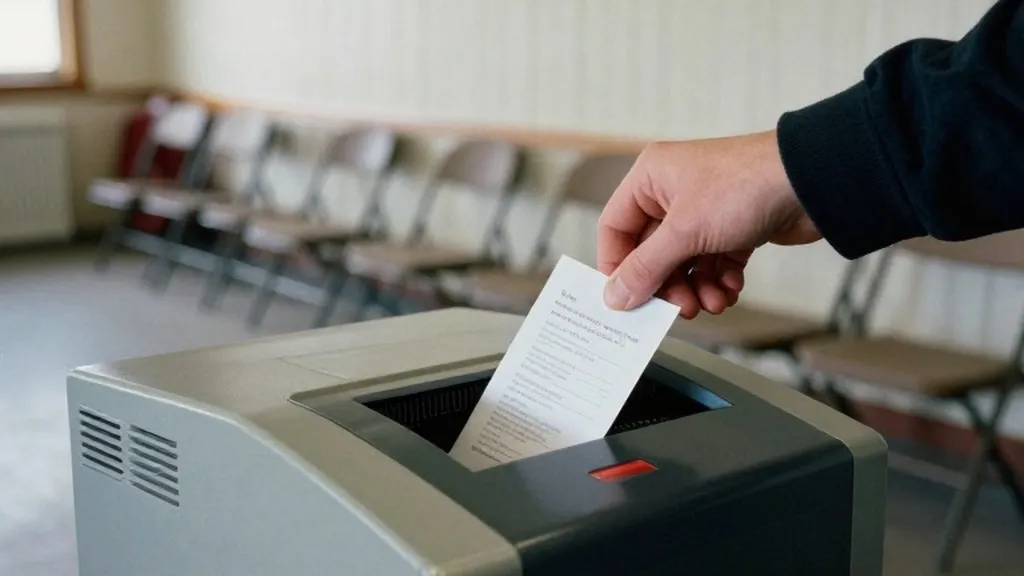
Voters across the United States are casting ballots on Tuesday, November 3, 2026, to decide which party will control the U.S. House of Representatives for the final two years of President Donald Trump's second term. All 435 seats in the lower chamber are on the ballot, creating a high-stakes contest that has drawn significant attention to the narrow margin separating the two parties. The Associated Press reports that the election is being framed as a referendum on the president's performance, with many Americans expressing frustration over high prices and the ongoing conflict with Iran.
According to Ballotpedia, Republicans currently hold 218 seats in the House, while Democrats hold 214, with one independent and several vacancies. This configuration means the balance of power is extremely tight. Democrats require a net gain of three districts to secure a majority, whereas Republicans can afford to lose no more than two seats to maintain their control. This three-seat margin makes the outcome of the election highly sensitive to voting patterns in competitive areas.
Ballotpedia has identified 46 battleground districts that are likely to determine the final outcome. Of these, 25 are currently held by Democrats and 21 by Republicans. The complexity of the map is further highlighted by the fact that 21 districts held by Democrats voted for President Trump in the 2024 election, while nine districts held by Republicans voted for Vice President Kamala Harris. These cross-over votes indicate that the traditional partisan alignment in many areas has shifted, making the races more unpredictable.
Seven states are using new congressional maps following mid-decade redistricting efforts. These states include California, Florida, Missouri, North Carolina, Tennessee, Texas, and Ohio. The implementation of these new boundaries has created new districts that may not vote in line with the intentions of the parties that drew them. Reuters notes that the redistricting process has been a central part of the Republican strategy to beat the historical midterm pattern where a president's party typically loses seats.
Sixty House incumbents have chosen not to run for re-election, including 23 Democrats and 37 Republicans. This high number of retirements has opened up numerous competitive races and given challengers a better chance of unseating entrenched opponents. The Associated Press notes that both parties have been preparing for the possibility that one or two seats could tip the balance of either chamber, making the battleground districts the primary focus of their campaigns.
RNC Chairman Joe Gruters emphasized the importance of voter turnout, stating that everything depends on turning out Republican voters. In contrast, DCCC Chair Rep. Suzan DelBene described the American people as angry and in need of change. These contrasting narratives reflect the different strategies employed by each party to motivate their base and persuade undecided voters in the key districts.
The Associated Press polling indicates that 35 percent of U.S. adults approve of President Trump's job performance, while only 25 percent approve of his handling of the economy. Approximately seven in 10 Americans say the country is heading in the wrong direction, with most blaming the president for high prices. These economic concerns are driving voter behavior in the battleground districts, where cost of living issues are a dominant theme.
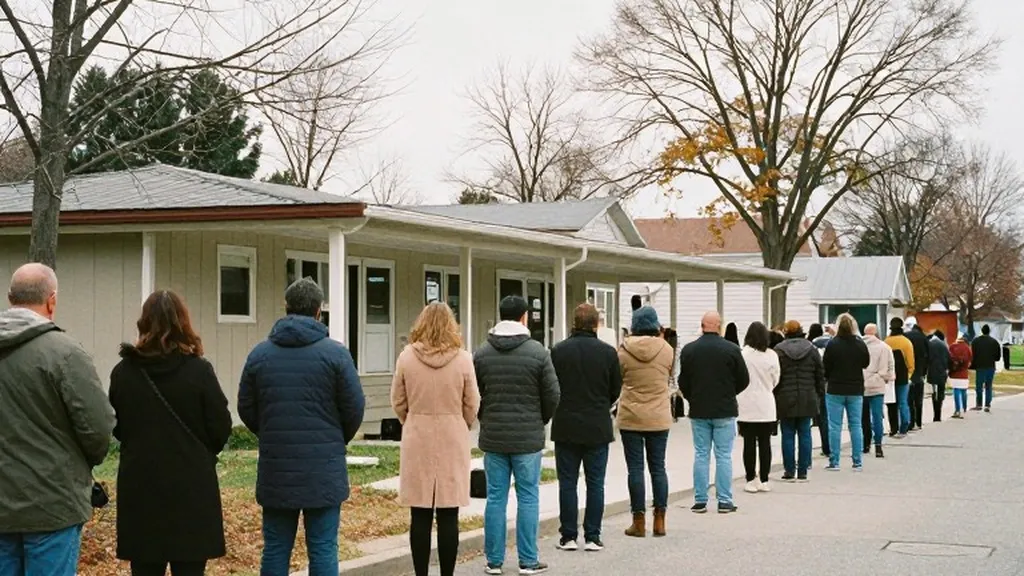
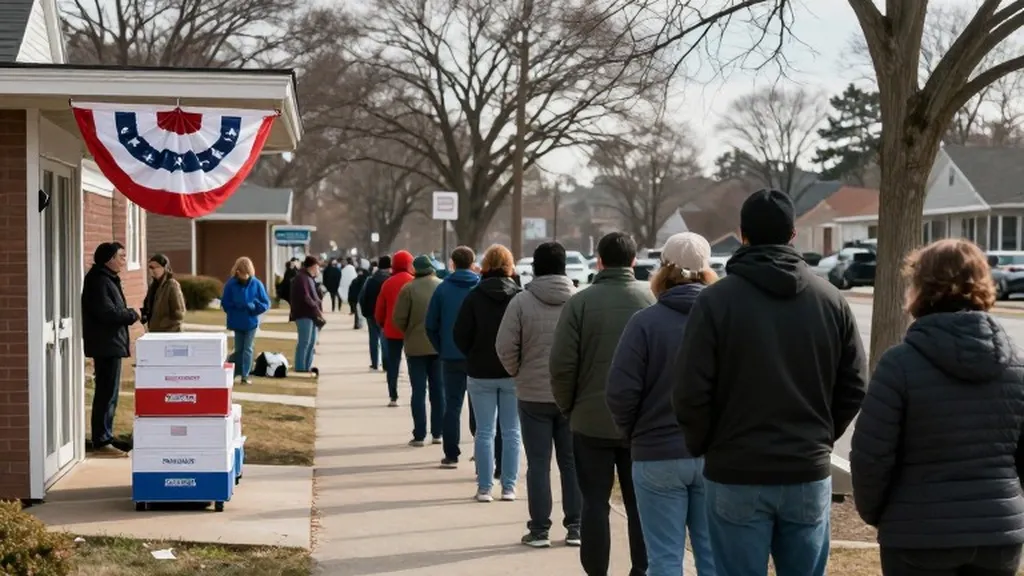
More than 57 million people had already cast their ballots as of Monday, surpassing the early voting totals from four years ago in many closely watched states. This early surge in participation suggests that the final vote count may be decided by the turnout of remaining voters on Election Day. The U.S. Postal Service has added extra hours and staff to ensure that mail ballots are counted on time, addressing concerns about the volume of incoming votes.
Voters in Palm Beach Gardens, Florida, and Raleigh, North Carolina, provided insights into the current mood. Mark Barker, a voter in Florida, expressed support for the president, while James Moore, a librarian in North Carolina, cited higher taxes and healthcare costs as reasons for his vote. These individual perspectives highlight the diverse factors influencing voters in the 46 battleground districts.
The new maps in seven states are adding a layer of uncertainty to the election. While Republicans used redistricting to their advantage in previous cycles, the new boundaries in states like Florida and Texas may not deliver the expected Republican gains. The Associated Press notes that the administration has also been involved in legal battles over voting rules, including a temporary bar on a plan to prevent noncitizen voting, which has raised concerns among critics about the impact on eligible voters.
As polls open across the country, the focus remains on the 46 battleground districts where the fate of House control will be decided. The combination of new maps, high incumbent turnover, and strong economic concerns creates a volatile environment for both parties. The outcome of these races will determine whether Democrats can achieve their three-seat net gain or if Republicans can hold their majority with a loss of no more than two seats.