Breaking: Election Day is here! Make your selections: The stakes for Congress and the next two years
Voters head to the polls to decide control of Congress, with all House seats and 35 Senate races on the ballot as polls open across the nation.
By Olivia Barnes ·
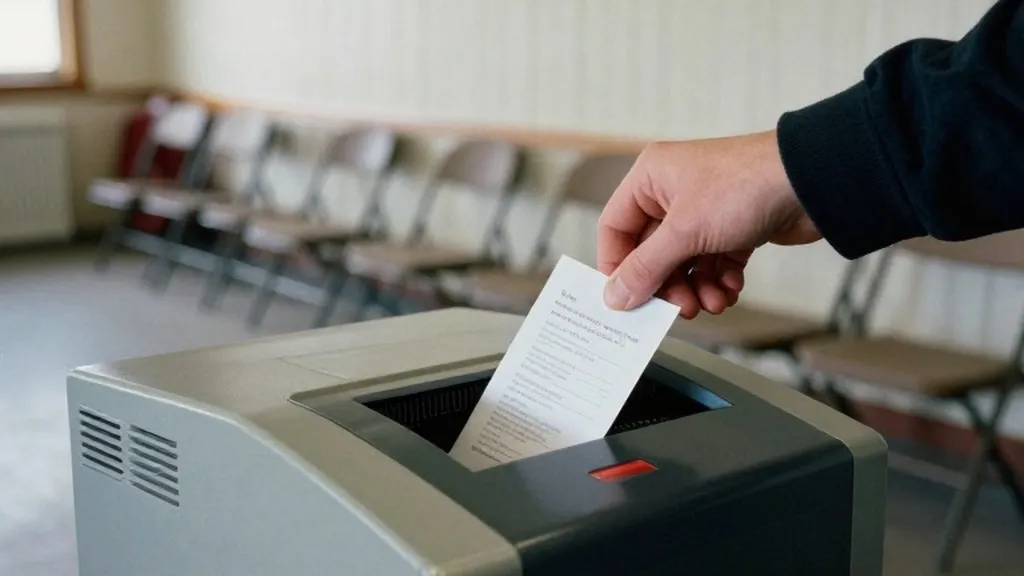
Voters across the United States are heading to the polls on Tuesday, November 3, 2026, to cast their ballots in the midterm election. This vote occurs halfway through President Donald Trump's second term and will determine which party controls Congress for the remainder of his presidency. All 435 seats in the U.S. House of Representatives are up for election, alongside 35 of the 100 Senate seats. The outcome will shape the balance of power in Washington and influence the direction of the country for the next two years.
The House race is a pivotal contest for both parties. Republicans currently hold 218 seats, while Democrats hold 214, with one independent and vacancies remaining. Democrats need a net gain of three districts to achieve a majority, whereas Republicans can lose no more than two seats to retain control. According to Ballotpedia, 46 House districts are considered battlegrounds, with 25 held by Democrats and 21 by Republicans. This close margin means that results in a handful of districts could determine the speaker of the House and the legislative agenda for the final two years of the current administration.
In the Senate, the fight for control is equally intense. Republicans hold 53 seats, Democrats 45, and two independents caucus with the Democrats. Democrats require a net gain of four seats to take the majority, while Republicans can afford to lose only two. Thirty-three regular elections are taking place, along with two special elections for the terms of Marco Rubio in Florida and JD Vance in Ohio. Eleven senators are not running again, including four Democrats and seven Republicans. The winners will begin their six-year terms on January 3, 2027. The control of the Senate will determine the pace of confirmations, legislation, and oversight of the executive branch.
Thirty-six governorships are also on the ballot this year. Republicans currently hold 26 governor's offices and Democrats 24. Of the offices up for election, each party holds 18. Nineteen of these races do not feature an incumbent, as 15 governors are term-limited and others have chosen not to run. Democrats would need a net gain of two governorships to achieve a nationwide majority, a feat they have not accomplished since 2010. The results in these races will influence state policies on healthcare, education, and infrastructure, and may have broader implications for future presidential ambitions.
According to the Associated Press, the election is being viewed as a referendum on President Trump's second term. Polling by AP-NORC indicates that 35% of U.S. adults approve of his job performance, while 25% approve of his handling of the economy. About seven in 10 adults say the country is heading in the wrong direction. Many voters cite high prices and an unpopular war with Iran as key concerns. More than 57 million people had already voted as of Monday, surpassing early voting totals from four years ago in many closely watched states. This early participation suggests a high level of engagement in the election.
Republican National Committee Chairman Joe Gruters emphasized the importance of turnout, stating, "Everything depends on turnout. If we turn out our voters, we win, and that's what we've been planning for." Democratic Congressional Campaign Committee Chair Representative Suzan DelBene countered that the American people are angry and want change. These statements highlight the differing strategies and moods of the two parties as they compete for control of Congress. The election will also test the midterm pattern, where a president's party often loses seats, though redistricting efforts have aimed to alter this dynamic.
In the Senate, several key matchups have drawn national attention. In North Carolina, Democratic former Governor Roy Cooper faces former Republican National Committee chair Michael Whatley. In Georgia, Senator Jon Ossoff is running against Republican Representative Mike Collins. In Ohio, Democratic former Senator Sherrod Brown challenges Republican Senator Jon Husted. In Michigan, Republican former Representative Mike Rogers competes against Democrat Abdul El-Sayed. In Texas, Republican Attorney General Ken Paxton faces Democrat James Talarico. In Maine, Senator Susan Collins runs against Democratic former State Senate President Troy Jackson. In New Hampshire, Democratic Representative Chris Pappas faces former Republican Senator John E. Sununu. These races are considered critical to the overall balance of power.
Governor races are also closely watched in states such as Georgia, Nevada, and Ohio. In Georgia, Republican health care executive Rick Jackson faces Democratic former Atlanta Mayor Keisha Lance Bottoms. In Nevada, Republican Governor Joe Lombardo competes against Democratic Attorney General Aaron Ford. In Ohio, Republican Vivek Ramaswamy faces Democrat Amy Acton. The Associated Press notes that Texas, Florida, and Iowa are also competitive governor races. Democrats hope to hold a majority of governorships for the first time in two decades, which would provide a stronger base for their legislative agenda and future candidates.
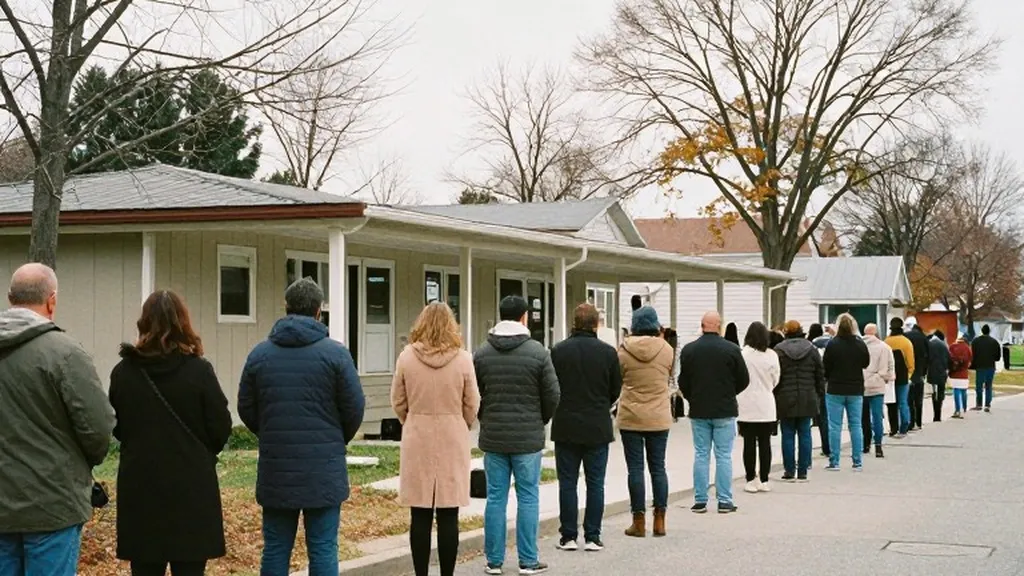
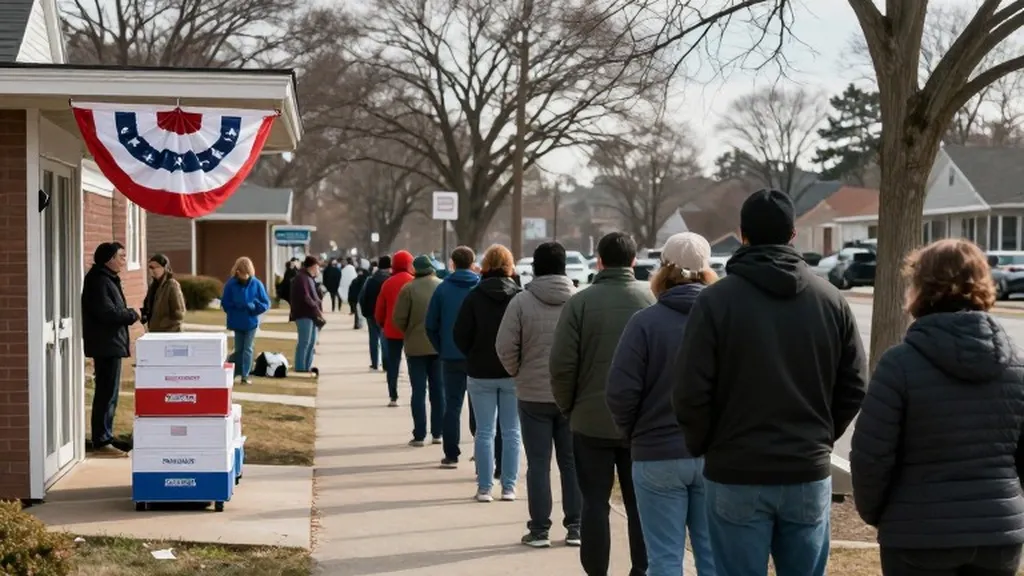
Voters should check their local poll hours before heading to the polls. According to Ballotpedia, hours vary by state. For example, polls are open from 7 a.m. to 7 p.m. in Alabama and 6 a.m. to 7 p.m. in Arizona. In California, polls are open from 7 a.m. to 8 p.m., though the state largely votes by mail. In New York, polls are open from 6 a.m. to 9 p.m. Voters can find their specific polling place at vote.gov or their state election office. It is important to note that anyone in line when polls close is entitled to vote. ID rules vary by state, so voters should check their state's requirements before going to the polls.
The election is also significant for financial markets. Reuters reports that Wall Street is watching for more than just control of Congress. Results could add to investor concerns about AI spending and debt ceiling negotiations. The outcome of the election may influence fiscal policy and regulatory environments, which could impact stock markets and economic stability. This highlights the broader implications of the midterm election beyond just political control.
Voters are encouraged to stay in line and make their selections. The election will determine the direction of the country for the next two years, with implications for the economy, healthcare, and foreign policy. Both parties are focused on turnout and messaging, with Republicans bracing to lose the House and Democrats cautiously optimistic about their chances. The results will be closely watched by the public and the media, as the election is seen as a test of the current administration's popularity and the effectiveness of the opposition's strategy.
In summary, the midterm election of 2026 is a critical moment for American democracy. Voters have the opportunity to decide the balance of power in Congress and the direction of state leadership. The election will influence the legislative agenda, confirmations, and oversight of the executive branch. As polls open across the nation, voters are urged to participate and make their voices heard in this important contest for the future of the country.