Serbia's New Government Focuses on Domestic Repairs
Experts say the opposition's victory forces a slow internal overhaul before any major changes to Serbia's external alliances or regional ties can occur.
By Olivia Barnes ·
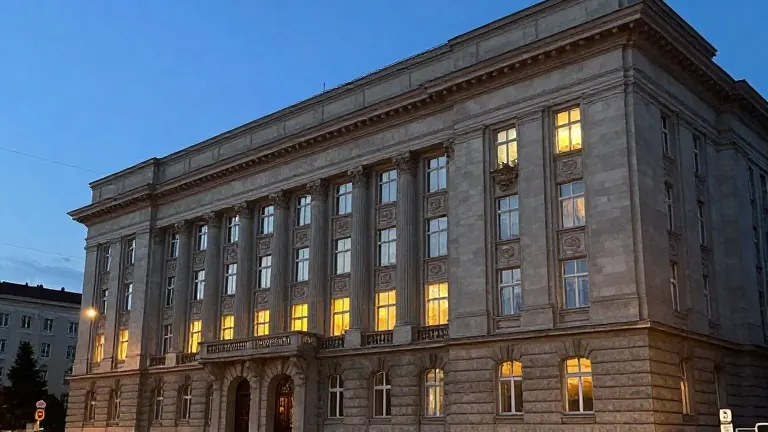
Serbia's political transition following the opposition's victory will initially concentrate on repairing internal institutions rather than altering the country's international stance. The Student List ended the 14-year rule of Aleksandar Vucic and the Serbian Progressive Party on Sunday. While international observers anticipate a pivot toward the West, analysts predict that domestic consolidation will take precedence over foreign policy adjustments in the immediate future.
Aleksandar Popov, director of the Centre for Regionalism in Novi Sad, stated that relations with neighbors will not be the first agenda item. The new authorities must address a system that has captured democratic institutions, including the judiciary, prosecution, police, and media. Popov argued that fixing domestic issues must precede the resolution of external disputes, noting that the outgoing regime had actively undermined regional ties. Relations with Croatia remain tense due to frequent sharp exchanges, while issues with Bosnia and Herzegovina and Montenegro remain unresolved.
Popov described the previous system as functioning on the production of internal and external enemies. He noted that despite public hostility between Belgrade and Zagreb, both sides held converging views on the structure of Bosnia and Herzegovina. The new government, led by experts and civic leaders, aims to stabilize the region and revive Serbia's prospects for European Union membership. Popov emphasized that the EU will not accept a candidate country without good neighborly relations, making the repair of damaged ties a central task for the incoming administration.
Vuk Vuksanovic, a lecturer in foreign policy at King’s College London, predicted that foreign policy will undergo the least transformation among Serbian public policies. Many international and domestic structures shaping these policies will remain in place. While Moscow viewed Vucic as a known quantity, the new government is unlikely to adopt a hawkish stance toward Russia overnight. Serbia continues to rely on preferential gas prices and maintains an interest in managing the Kosovo dispute, which limits the scope for immediate diplomatic shifts.
Vuksanovic added that Serbia will likely maintain its position of not recognizing the annexation of Crimea and Donbas. However, the future of ammunition deliveries to Ukraine remains uncertain, as the opposition viewed Vucic's weapons sales to Kyiv as a strategy to secure Western tolerance for his domestic rule. The new government is not expected to join EU sanctions against Russia immediately, as it sees value in maintaining certain ties with Moscow.
Bosko Jaksic, a foreign policy analyst, noted that Serbia's close relationship with Israel will face scrutiny rather than termination. The new government will re-examine recent contracts, particularly those involving Serbian ammunition exports to Israel and Israeli surveillance equipment imports. Jaksic observed that Netanyahu's government has lost another nationalist ally in Europe following the political changes in Hungary. He added that Serbia's future stance will depend on the outcome of Israel's own elections and how Jerusalem positions itself toward the new authorities in Belgrade.
Jaksic suggested that Serbia's strategy of sitting on multiple geopolitical chairs will be re-evaluated. He expects Belgrade to strengthen ties with the EU, as this approach brought more harm than good in the past. The international community should anticipate a period of intense internal reform rather than sudden realignments in Serbia's external relations.
Source: Al Jazeera