Lebanese reporter survives strike that killed colleague
Zeinab Faraj recounts the events of April 22, when drones and missiles hit two women documenting the aftermath of the war in southern Lebanon.
By Alejandro Brooks ·
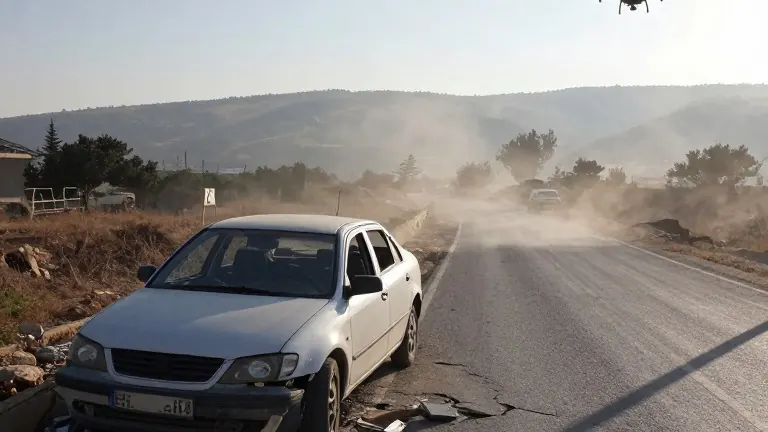
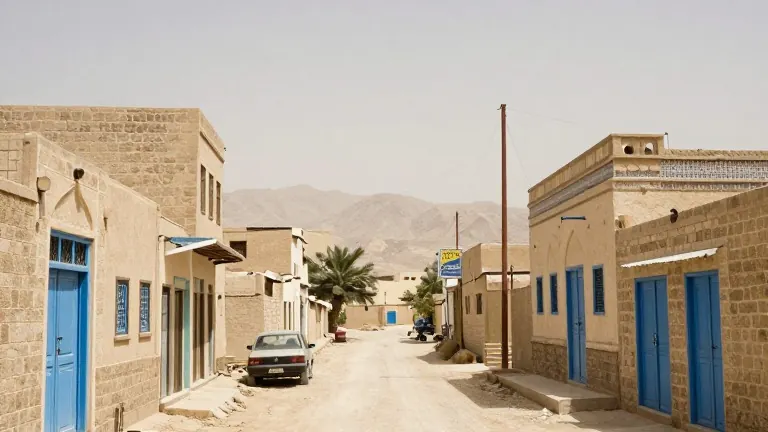
Zeinab Faraj, a 21-year-old photojournalist, survived a series of drone and missile strikes on April 22 that killed her colleague, Amal Khalil. The attack occurred in the village of al-Tiri in southern Lebanon, roughly three weeks after Israel agreed to a ceasefire with the country. Faraj and Khalil had traveled south to document the physical damage left by a month of concentrated airstrikes that flattened several villages.
The two women had met through social media and collaborated on several assignments prior to the trip. Faraj was freelancing while completing a degree in radio and television. She stated she expected the journey to be routine and felt no fear, noting that the audible gunfire and artillery were typical conditions for a videographer. They were traveling with two men, Ali Nabil Bazzi, a 27-year-old municipal official, and Mohammed Hourani, a 37-year-old friend of the mayor, in a separate vehicle ahead of them.
Faraj did not hear the initial missile impact. She heard Khalil scream and saw the car in front of them catch fire. The two women exited their vehicle, and Faraj attempted to pull Bazzi from the wreck. Khalil told her the men were gone. Faraj observed that their bodies were torn apart. Drones then arrived, flying at a low altitude. Faraj described one drone coming so close to her face that she tried to cover it, only for it to rise again.
After phoning emergency services, the women were told to drive back up the road because ambulances were blocked. As they tried to re-enter their car, a missile struck the vehicle. Both women were thrown backward. Khalil wrapped her arms around Faraj and said she hoped the drones would think they were dead. They took shelter in a nearby house where Khalil, with blood on her face, hand, and leg, could not move. Faraj sent a final message to her sister, writing, "There's no hope left. Forgive me," before her phone died.
Faraj woke trapped under rubble with difficulty breathing. Paramedics reached the site and pulled her out as drones returned. She reported that a stun grenade was dropped by a drone during the extraction. At the hospital, nurses initially reassured her about Khalil's condition before going quiet. Khalil is believed to have died approximately one hour before paramedics were permitted to return to the area after rescuing Faraj.
The Israeli military stated it identified saboteurs violating the ceasefire. Human rights groups labeled the attack a war crime, noting the military received repeated messages requesting permission to conduct a rescue while the women sheltered. A week before the strike, an Israeli military spokesperson had shared a video of Khalil and labeled her "terrorist media." Khalil had also received death threats from Israeli phone numbers.
Faraj is preparing to return to university but continues to struggle with walking and has a visibly injured hand. A facial injury has affected the movement of one eyebrow. She wakes at night screaming and remains on edge around drones and warplanes. She said she is haunted by the sight of Hourani on the ground, his eyes open and looking at her. Whether she will return to frontline journalism remains uncertain.
Source: The Guardian