Israelis await final Knesset count
Absentee ballots are being counted in an election that left no bloc with a clear majority, forcing complex coalition negotiations.
By Olga Paredes ·

Israelis waited for final parliamentary results on Thursday to determine whether Prime Minister Benjamin Netanyahu or his rivals would command a majority in the 120-seat Knesset. The count of approximately 500,000 absentee ballots from military personnel, diplomats, and individuals in hospitals and prisons is expected to be completed by evening. These votes are not anticipated to alter the outcome dramatically, but they will confirm the seat distribution projected by local media.
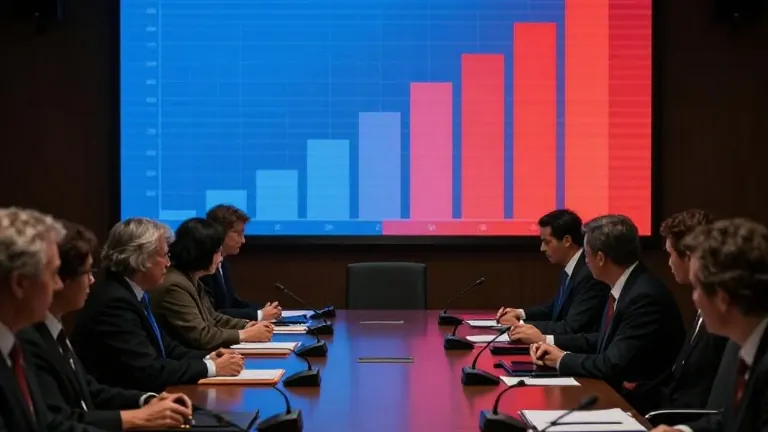
Preliminary counts indicate Netanyahu's bloc holds 53 seats, while opposition parties have secured 48. Arab-led parties, who campaigned against Netanyahu, hold 19 seats. A majority requires 61 seats, meaning no single faction currently possesses the power to govern alone. This fragmented result places the burden of coalition building on multiple parties in the weeks ahead.
The primary challenge for potential governing coalitions is the possibility of an alliance between Jewish and Arab parties. Such a partnership would be historic, as no Arab party has joined a government since a brief stint in 2021. Gadi Eisenkot, the chief rival to Netanyahu and former military chief, has stated he is open to working with Arab-led groups to reach the necessary 61-seat threshold. In his first public statement since Wednesday, Eisenkot described a government that serves all citizens and reflects the will of the people.
One of the key Arab parties, the Joint List, expressed readiness for political cooperation late Wednesday. The party cited a strong showing from its supporters and noted Jewish voters who backed candidates willing to work with Arab representatives. Rallies were held overnight in Tel Aviv and Jerusalem, with crowds in both cities supporting the formation of a coalition that includes Arab-led parties. Jerusalem, typically more conservative, saw notable participation in these gatherings.
Netanyahu's Likud party, which received the most votes, has accused Arab-led parties of stealing the election. The party asked the election committee to investigate these claims but did not provide specific evidence. The election committee responded that the number of reported irregularities was low, noting that the voting process was relatively calm. Netanyahu remains in charge as the sitting prime minister until a new government is formed.
President Isaac Herzog is expected to task a leader with forming the next government next week. While tradition suggests this role goes to the leader of the largest party, it is not a strict requirement. Herzog signaled on Wednesday that he wants to avoid a repeat election, a goal shared by Eisenkot. If a government cannot be formed after multiple attempts, Israel would face another election early next year.
The election took place against a backdrop of ongoing conflict and domestic division. Israel entered the vote with significant issues, including the exemption of the ultra-Orthodox population from military service and the treatment of Palestinians in Gaza and the West Bank. Netanyahu faces corruption allegations and accusations of delaying deals for hostages in Gaza for political gain. He is the longest-serving prime minister in the country's history.
Arab citizens, who make up 20 percent of Israel's population, expressed cautious hope for change. Brosli Elias, a resident of Nazareth, said he expected the government to address the rights of Arab citizens. The threat of further strikes against Iran adds to the uncertainty, as the Trump administration has spoken of new attacks after U.S. midterm elections on Nov. 3. Experts suggest Netanyahu could use a renewed war to press for a unity government under his leadership.
A new government would also need to address the public inquiry into the security failures of the Oct. 7, 2023 Hamas attack. Netanyahu has long resisted this inquiry, which many Israelis view as essential to understanding how the deadliest extremist attack in the country's history occurred. The formation of the next cabinet will determine the pace and scope of this investigation.
Source: CBC News