Israel faces weeks of talks after election leaves no clear winner
With 85% of votes counted, neither the Netanyahu nor Eisenkot blocs hold a majority, forcing complex coalition negotiations.
By Alejandro Brooks ·
Israeli voters have returned to the polls for the fourth time since 2019, yet the outcome offers no immediate resolution to the country's political gridlock. As of Wednesday, no single faction has secured the 61 seats required to form a government in the 120-seat Knesset, setting the stage for an extended period of negotiations.
The path to this stalemate began with a surge in turnout that reached nearly 78% of eligible voters, the highest level since 1999. This high participation reflected widespread dissatisfaction with the current administration, particularly regarding military draft exemptions for ultra-Orthodox Jews and the conduct of the war in Gaza. Despite this anger, the opposition failed to unite behind a single anti-Netanyahu front strong enough to guarantee a majority.
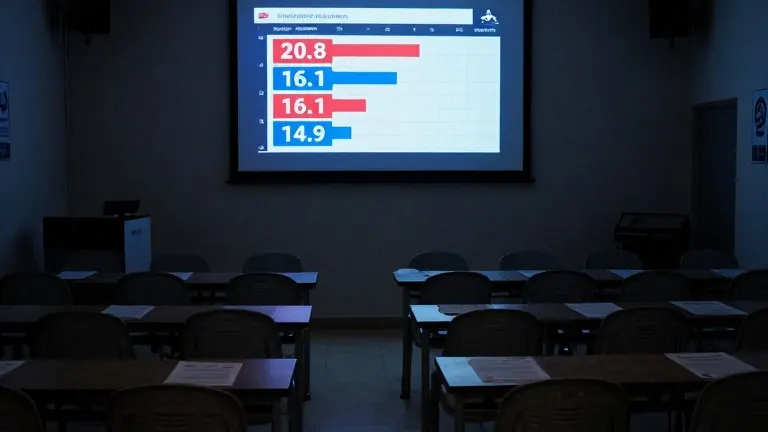
Current partial results show Prime Minister Benjamin Netanyahu’s Likud party holding 20.8% of the vote, down from 23.4% in 2022. His main challenger, former military chief Gadi Eisenkot, leads his Yashar party with 16.1%. Arab-led parties have captured 14.9% of the vote, a historic showing that complicates the arithmetic for both camps. Local media projections suggest Likud and its allies hold 53 seats, while Yashar and its partners hold 48. The 19 seats held by Arab-led parties could serve as the deciding factor.
Netanyahu has publicly rejected the idea of partnering with Arab-led parties, labeling such a move treasonous. He warned against forming a dangerous government with them. Eisenkot, conversely, has left the door open for an alliance if the Arab parties recognize Israel as a Jewish state and acknowledge Hamas as an extremist group. However, other parties in Eisenkot’s potential coalition have previously ruled out such a partnership.
Elad Naveh, the control manager at the Central Elections Committee, stated that the counting of absentee ballots will continue until Thursday evening. Approximately half-million such ballots are expected from military personnel and diplomats. President Isaac Herzog, who holds the authority to invite a party leader to form a government, is not required to choose the leader of the largest party. He said on Wednesday that he would do everything possible to avoid another round of elections.
If no coalition can be formed, new elections could be scheduled for early next year. Israel has already held five elections between April 2019 and November 2022 due to similar deadlocks. Eisenkot told supporters on Wednesday that holding another election after such high turnout would be a mistake. He described it as his personal duty to respect the will of the people and form a government.
Source: The San Diego Union-Tribune