Iraqi Prime Minister Tests New Economic and Security Ties with Damascus
The first top-level visit since the 2024 fall of the Assad regime focuses on trade corridors, border security, and the status of armed groups.
By Olivia Barnes ·
Iraqi Prime Minister Ali al-Zaidi arrived in Syria on October 28, marking the first high-level visit from Baghdad since the Assad regime collapsed in 2024. The trip places immediate pressure on a relationship defined by recent friction over border security and long-standing strategic dependencies. While both leaders seek to formalize economic cooperation, the visit occurs against a backdrop of unresolved tensions involving Jordan and the status of armed militias.
Syrian President Ahmed al-Sharaa framed the moment as a historic opportunity to deepen state institutions and coordinate on regional security. In an interview with Iraq's Dijlah TV, al-Sharaa emphasized the economic imperative of linking Iraq's Faw Port to Syria's Mediterranean port of Tartous. He called for the reconstruction of oil pipelines connecting Iraq to the port of Baniyas, noting that Iraqi oil has been flowing into Syria due to the ongoing crisis with Iran.
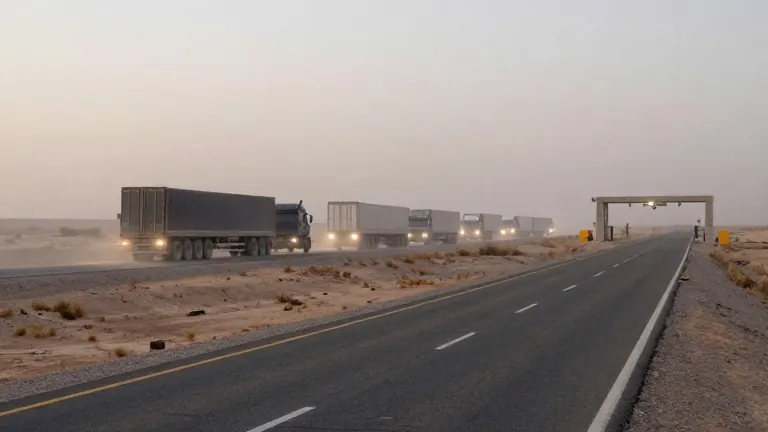
State data cited by the Syrian news agency SANA indicates that commercial traffic between the two nations has increased sharply over the past six to seven months. The figures include more than 100,000 transit trucks and 40,000 import and export trucks moving across the border. This surge in logistics underscores the practical value of the corridor, even as political hurdles remain.
Security cooperation is a central pillar of the talks, yet questions persist. Al-Sharaa told Dijlah TV that the border is completely secure, a claim that contrasts with recent friction between Syria and Jordan. Syria accused Jordan of conducting an airstrike on ISIS targets that killed several civilians, suggesting that border management still requires careful negotiation.
Al-Sharaa also addressed the controversial history of his presence in Iraq. He stated that he went to Iraq in 2003 out of solidarity to confront the American occupation without formal organizational affiliations. He was imprisoned around 2005 and returned to Syria in 2011. The topic remains sensitive in Baghdad because Iraq views the groups with which al-Sharaa associated as terrorist organizations.
The strategic weight of the border region has fluctuated since the 2003 US invasion. Insurgents used the Middle Euphrates River Valley, particularly around al-Bukamal and al-Qaim, to move into Iraq. Later, Iraqi Shi'ite militias entered Syria to support the Assad regime, making the crossings part of Iran's supply network. Today, oil continues to move by truck through the desert near al-Tanf, demonstrating that these physical corridors remain active despite political shifts.
The outcome of the visit extends beyond the two neighbors. Iraq hosts Iranian-backed militias that have historically threatened Israel and operated in Syria before Assad's fall. A more secure relationship where such groups cannot move freely would impact regional calculations for Israel, Saudi Arabia, and Jordan. Al-Zaidi’s delegation arrived with few public details, but the focus on state authority and trade infrastructure signals a practical approach to the new diplomatic reality.
Source: The Jerusalem Post