Long Beach Aquarium Displays Over 40 Jellyfish Species in New Immersive Exhibit
The 'Jelly Dreamscapes' exhibition opens with a collection of gelatinous invertebrates that have survived for more than 500 million years.
By Olivia Barnes ·
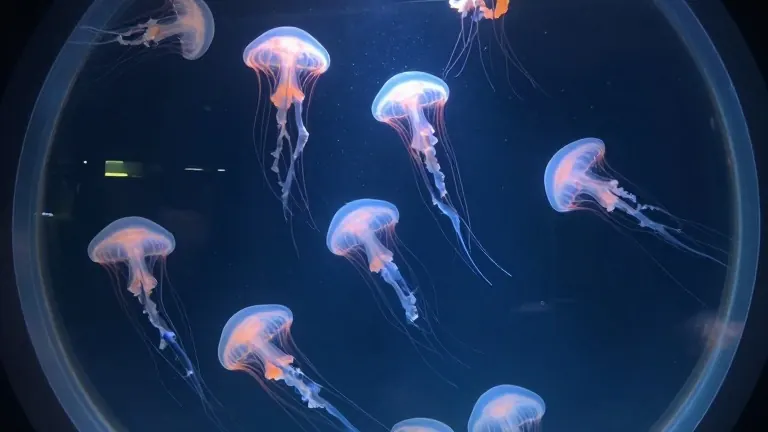
The Aquarium of the Pacific in Long Beach has opened a new exhibition that places more than 40 species of jellies and ctenophores on public display. The facility staff propagates and raises these animals in-house, growing the specific food sources required for each species to survive. This collection represents one of the most diverse groups of jellyfish maintained by any institution in the United States.
The exhibit, titled 'Jelly Dreamscapes,' features hundreds of live specimens floating in tanks designed to mimic their natural environments. The display includes dramatically lit umbrella-shaped creatures from various global locations. Visitors can observe the animals pulsing their bells and trailing tentacles in a controlled setting. The atmosphere is enhanced by soothing music, creating a sensory environment distinct from the rest of the aquarium.
Beyond the main exhibition space, an exterior terrace offers a tactile interaction area. There, visitors can gently touch moon jellies in a separate tank. These translucent creatures bob in the water, allowing for a direct physical connection with the animals that is not possible inside the main gallery.
Jellies are not fish, despite their common name. They are gelatinous invertebrates that have roamed the seas for over 500 million years, predating dinosaurs by more than 250 million years. Ctenophores, which are jellyfish-like planktonic animals, are even older. These creatures lack hearts, brains, or gills. Instead, they rely on sensory nerve cells for navigation and use stingers to stun prey, which includes zooplankton, small crustaceans, and other jellies.
The biological diversity of the exhibit extends to size and reproductive methods. Some jellies are as small as a pinky fingernail, while others can unfurl tentacles up to 90 feet long, a length comparable to a blue whale. Most jellies are either male or female, though some change sex or exist as hermaphrodites. Reproduction occurs through fertilized eggs and cloning. Fertilized larvae attach to hard surfaces on the ocean floor and clone themselves before becoming independent jellies.
Although jellies are 95% water, they serve as a vital food source for fish, sea turtles, and marine mammals. They often travel in large groups known as smacks, which makes them easy for predators to capture. Humans also consume them, with jellyfish salad being a popular dish in Korea and China. Their outer nerve cells react to changes in water chemistry, making them early indicators of environmental shifts in their habitats.
The collagen found in jelly bells is currently being studied for potential medicinal applications. Researchers are examining its use in anti-aging treatments, wound healing, reconstructive medicine, and brain health. The animals themselves typically live for one year, during which time they contribute to the ocean's ecosystem while providing aesthetic value to viewers.
The 'Jelly Dreamscapes' exhibition runs through Friday, April 30, 2027. Tickets are priced at $49.95 for adults, $46.95 for seniors, and $34.95 for children, with entry free for those two and under. Reservations are required for all visits. The aquarium is located at 100 Aquarium Way in Long Beach.
Source: Larchmont Chronicle