
LA and Long Beach Ports Plan $60 Payment for Every Electric Truck Trip
The joint program seeks to offset high operating costs as the industry faces rising diesel prices and steep upfront vehicle expenses.
By Olivia Barnes ·
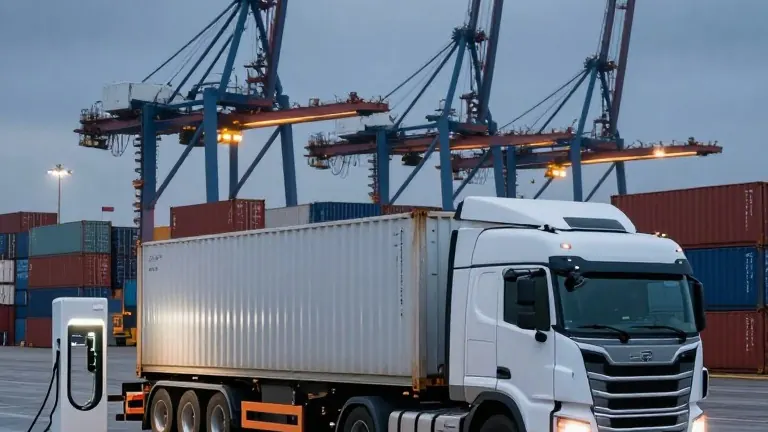
The Ports of Los Angeles and Long Beach propose a joint program that would pay electric truck operators $60 for each one-way trip to or from the terminals. The initiative is designed to accelerate the transition away from diesel vehicles as the region struggles to meet ambitious climate deadlines.
Port officials plan to allocate $60 million from a fund established in 2022 to finance these per-move incentives. The money originates from a $10 clean truck fee levied on diesel rigs. The program has not yet received approval from the harbor commissions, and port leadership is currently gathering feedback from industry stakeholders.
Noel Hacegaba, the chief executive of the Port of Long Beach, stated that achieving 100% zero emissions requires 100% zero-emission trucks. He noted that rewarding the use of these vehicles is a recognized priority. The Port of Los Angeles aims to use zero-emissions cargo-handling equipment by 2030 and convert its short-distance container trucking fleet to all-electric by 2035. The Port of Long Beach targets the elimination of carbon emissions by 2050.
Trucking companies have requested financial support to manage the high costs of operating electric fleets. Robert Loya, the chief executive of the Harbor Trucking Assn., explained that the association asked the ports to help with ownership and operating expenses. Although electric trucks require less routine maintenance than diesel models, their higher energy demands create new financial burdens.
Electric big rigs typically need charging once daily, whereas diesel trucks are refueled every three to four days. A full tank of diesel provides more than 1,000 miles of range, while a fully charged standard electric truck offers approximately 200 miles. The new Tesla Semi is estimated to have a range of 325 miles for the standard version and up to 500 miles for the long-range version. Charging time creates downtime costs that operators must absorb.
The upfront cost disparity remains a major barrier. Operators can purchase a used diesel truck for around $70,000, while first-generation electric trucks cost more than $500,000. The new Tesla Semi is expected to cost nearly $400,000 after taxes and fees. Additionally, electric trucks weigh significantly more, causing tires to wear out faster. Loya said batteries require replacement every five to seven years at a cost of up to $7,000 per unit. Insurance premiums are also higher due to the limited data available to insurers regarding these vehicles.
According to the California Energy Commission, 9,000 medium- and heavy-duty zero-emission vehicles were registered in California at the end of 2025. Of that total, 2,075 were trucks. The Port of Long Beach has already set aside nearly $5 million for one-time payments of $10,000 to early adopters. Under the proposed per-move program, funds would be capped at $36,000 per truck per year, with larger allocations available to companies that deploy more electric vehicles.
Source: Los Angeles Times
More Business · Consumer Watch · Report a business · Got a Story?