Doña Chole's Altar: A Tijuana Tradition Defies the Haze of Memory
In the dusty streets of Colonia Obrera, a woman prepares a two-tiered ofrenda that serves as a bridge between the living and the departed, a practice that persists despite the dominance of Halloween in border towns.
By Alejandro Brooks ·
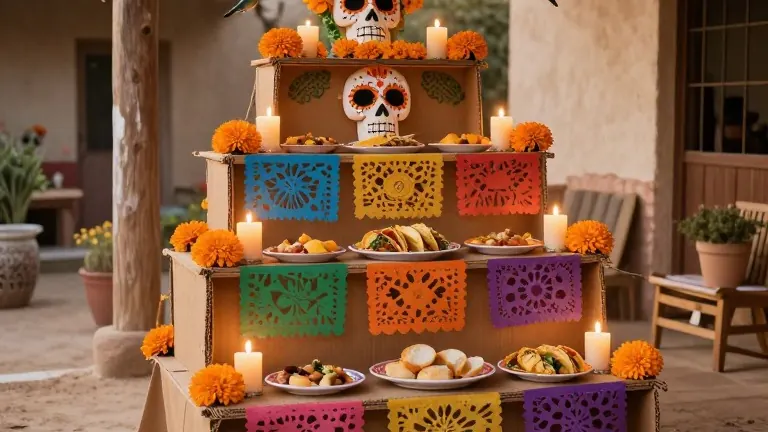
For decades, finding a Day of the Dead altar in Tijuana was a rare feat. In the late 1980s, the holiday was nearly invisible in the border city, overshadowed by Halloween decorations in school windows and local shops. While families in Oaxaca or Michoacán could find community ofrendas within a few blocks, Tijuana residents often had to search deliberately to locate a single display. This cultural gap made the tradition feel like a fragile memory rather than a living practice.
A reporter seeking a specific home altar for a story was directed to Colonia Obrera, a neighborhood of dirt roads and improvised fences. The area had become a home for families from Oaxaca, particularly Mixtec migrants who settled there to start over while maintaining their cultural roots. At a local grocery store, a clerk pointed the reporter toward Doña Chole, a woman who set up two distinct altars each year. One was dedicated to children arriving on November 1, and the other to adults arriving on November 2. The clerk warned that Chole was somewhat guarded but willing to speak with those who showed genuine interest.
The house was small and surrounded by trees. Doña Chole, approximately 75 years old with a long white braid, was in the patio finishing preparations when the reporter arrived. She welcomed them without hesitation, noting that her deceased relatives would be pleased to see their altar on television. The altar for adults was fully arranged with bottles of tequila, mezcal, pulque, and soda. Plates of mole with chicken, quesadillas, tacos dorados, and pan de muerto were placed on lower levels. Photographs of her father, her husband Joaquín, and her son Pedro, who had passed away a year prior, sat at the top.
Letters from family members were tucked between the photos, containing updates on birthdays and memories they had shared. When the reporter asked if the food was a waste, Chole responded with a calm certainty. She explained that the dead come because they know they are being waited for. They return to enjoy the things they loved in life. She stated that they arrive with the wind, the rain, or as hummingbirds.
As she spoke, several hummingbirds appeared among the cut paper decorations in the patio. Chole addressed the birds naturally, telling them the food was ready and that they were being waited for. The scent of roses, which had been present for several blocks before they reached the house, remained in the air, though no rose bushes were visible. Chole spoke of her deceased family members with the same ease she used to describe relatives who lived far away, correcting a flower and straightening a photo as she shared their stories.
The visit ended with the reporter leaving the patio, having documented the altar and the woman’s conviction. Chole did not view the days as a cultural performance or a ceremony. For her, it was a family reunion. The tradition in Tijuana had survived not through official displays, but through these private, domestic acts of remembrance that kept the connection between the living and the dead intact.
Source: Times of San Diego