50% of Republicans and 58% of Democrats Report High Enthusiasm for Midterm Elections
A new poll released by Cascade PBS reveals a sharp divide in voter energy between the two major parties heading into the 2026 midterms.
By Olivia Barnes ·
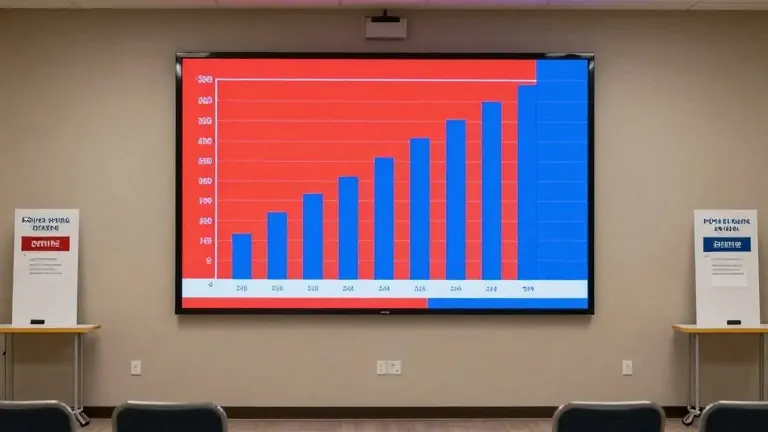
Voter enthusiasm for the upcoming midterm elections is sharply divided along party lines, according to a survey conducted for Cascade PBS.
The poll found that 58 percent of registered Democrats report high enthusiasm for voting in the 2026 midterms. In contrast, 50 percent of registered Republicans expressed similar high levels of enthusiasm. Among independent voters, the figure stood at 42 percent.
The survey, which was conducted online between October 20 and October 25, asked 1,200 registered voters across the United States about their likelihood of voting and their level of interest in the election. The margin of error for the study is plus or minus 3.5 percentage points.
Democratic National Committee Chair Amanda Gomez said the numbers reflect a base that is ready to defend the party’s legislative agenda. "Our members are engaged and they are showing up," Gomez said. "This energy is going to be visible on election day." Republican National Committee Chair James Wilson noted that while the enthusiasm gap exists, the sheer size of the Republican electorate remains a factor. "We have a large and motivated base," Wilson said. "We are focused on getting every vote counted." Independent voters were asked to rate their interest on a scale of 1 to 5, with 4 or 5 considered high enthusiasm.
The stakes of the 2026 midterms include a full renewal of the U.S. House of Representatives and one third of the U.S. Senate. Control of the House will determine which party sets the legislative agenda and chairs key committees in the coming two years. The Senate race will be contested in 35 states, with 35 seats up for election. The party that maintains its majority in the Senate will control the confirmation process for federal judges and cabinet appointments.
Historical data from the last five midterm cycles shows that the party that holds the presidency typically loses seats in the House. The current administration belongs to the Republican Party. The poll did not ask respondents about their confidence in the final outcome of the race. The data was weighted to match national demographic benchmarks for age, gender, race, and education level.
Source: Cascade PBS