Brent Crude Falls to September Low
Alaska’s projected budget surplus shrinks as oil prices drop 5.2% following de-escalation talks with Iran.
By Alejandro Brooks ·

Brent crude dropped 5.2% to $93.27 per barrel by midday London time on Monday, marking its lowest level since early September. The decline followed President Trump's comment that he was highly unlikely to order new strikes on Iran while diplomatic talks progressed. Brent settled at $92.57, a drop of $5.75, and continued falling in post-settlement trade to more than $7 below Friday's close.
This move followed a 16% plunge in the previous week, the steepest weekly decline for Brent since the pandemic began. Despite ongoing military activity, with Washington and Tehran reporting ship hits near the Strait of Hormuz and the Houthis claiming an attack on Saudi Aramco offices, traders are pricing in peace. JPMorgan estimated a global surplus of 1.4 million barrels a day for October, while Morgan Stanley noted that Dated Brent slipped to a discount relative to futures.
The price drop directly impacts Alaska's state revenue. The Department of Revenue's deputy commissioner told Bloomberg Television that each $1 rise above the state's $75 spring forecast adds roughly $45 million to state revenue for the year. Conversely, every $10 shaved from the fiscal-year average removes approximately $450 million from the treasury.
Alaska North Slope crude averaged $98.13 from July through October, with October alone averaging $122.21, the fifth-highest month on record. In October, ANS crude commanded a $13.91 premium over Brent as refiners paid extra to avoid shipping through the Strait of Hormuz. Alaskans for Sustainable Budgets, a fiscal-policy group, lowered its projected gain over the spring forecast from $1.67 billion to $1.28 billion in the week before Monday's price drop.
Production levels remain below forecasts. The spring forecast anticipated 518,500 barrels a day for the fiscal year ending June 30. Output has run nearly 7% below that target, although October's 524,446 barrels a day represented the best monthly performance yet.
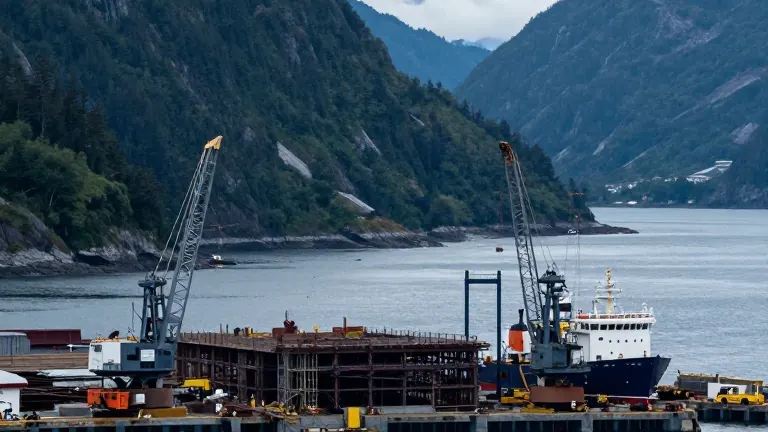
ConocoPhillips, the largest producer on the North Slope, reported $423 million in Alaska earnings for the third quarter, up from $130 million a year earlier. Its Alaska crude averaged $96.52 per barrel, compared to $72.72 a year prior. Higher prices added $302 million to earnings, while higher volumes added $25 million. The company spent $936 million on Alaska capital during the quarter and stated that Willow module fabrication is more than 75% complete, targeting first oil in early 2029.
The enacted fiscal 2027 budget projects a $106.3 million surplus, built on a $75 oil price assumption. Residents received a $1,000 dividend and a $200 energy relief payment. However, the shrinking surplus reduces the funds available for any new energy supplement proposed for the January legislative session. Futures for fiscal 2028 through 2036 sit only 60 cents to $1 above the forecast, indicating the current windfall is temporary.
Brett Watson, an Anchorage economist, noted that some remote communities pay $10 to $20 per gallon for heating oil. Because fuel is delivered by barge, these prices will remain high until spring. The Revenue Department's fall forecast, due in early December, will determine how much of the current cushion survives the price decline.
More Business · Consumer Watch · Report a business · Got a Story?