Second Train Crash in Four Months Kills 68 Ahead of Spain Vote
A collision between a RENFE and an IRYO train near Urda has intensified scrutiny of the high-speed network just weeks before the national election.
By Olga Paredes ·
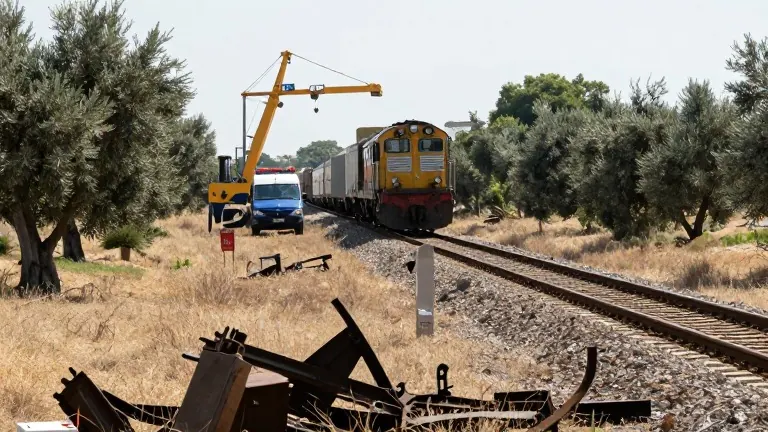
Spain declared three days of mourning on Thursday following the country’s second deadly high-speed rail disaster in under four months. The collision near the town of Urda in the central province of Toledo killed 68 people and injured dozens more, according to regional authorities. Prime Minister Pedro Sánchez visited the site after officials confirmed the death toll and reported that survivors were receiving treatment at local hospitals.
The accident occurred at 8:53 a.m. on Wednesday when a RENFE train struck a stationary IRYO train from behind. Transport Minister Óscar Puente stated that the crash resulted from an order issued by the central command center after a computer malfunction disabled the security system on a 63-kilometer stretch of track. At 8:30 a.m., the failure forced all trains on that section to stop, leaving the IRYO service halted near Urda with the RENFE train 25 kilometers behind. Puente said the command center incorrectly instructed the RENFE engineer to resume full speed while a stop signal remained active, leading to the impact.
The rail network, which ranks second only to China in track mileage, had not experienced a fatal accident since entering service more than 30 years ago. Last year’s system carried 45 million passengers, including millions of international tourists. This incident follows a January crash in southern Spain where 46 people died when one train derailed and hit an opposing service. Both accidents involved state-owned RENFE and the private operator IRYO, which began running on Spain’s high-speed lines in 2022 after the market opened to competition in 2021.
The timing of the disaster complicates the political landscape for Sánchez, who is facing voters in Spain’s first national election since 2023. The vote takes place four weeks from the crash date. Sánchez’s Socialist party had sought to capitalize on public frustration with housing costs and rents, but the rail tragedy adds a new layer of pressure. Polls indicate his government faces a challenging campaign. Sánchez posted on social media earlier that morning that there were many reasons to be optimistic about the country, a message that now sits in contrast to the emergency response unfolding in Toledo.
Political rivals have sharpened their attacks in response to the crash. Alberto Núñez Feijóo, leader of the conservative Popular Party, called for a full investigation and canceled his party’s campaign events for the day to honor the victims. Santiago Abascal, head of the far-right Vox party, used more aggressive language, describing the government as a criminal organization and promising to work until its members answer for their actions in court. Abascal’s party is positioned to potentially join a coalition with the conservatives.
Minister Puente addressed questions about whether he would resign after a second major incident under his tenure. He said his focus remained entirely on managing the collision and recovery efforts rather than his political future. He clarified that the train engineers were not at fault for the collision. Emergency workers, firefighters, police, and soldiers spent Wednesday moving bodies and rescuing survivors. Cranes began removing damaged train parts late in the day as the cleanup effort continued.
Source: KPBS