25 Million Cubic Yards of Dredge Created Fiesta Island
City engineers designed a 200-foot-wide sand levee system to manage disposal material that residents opposed dumping into the Pacific Ocean.
By Olivia Barnes ·
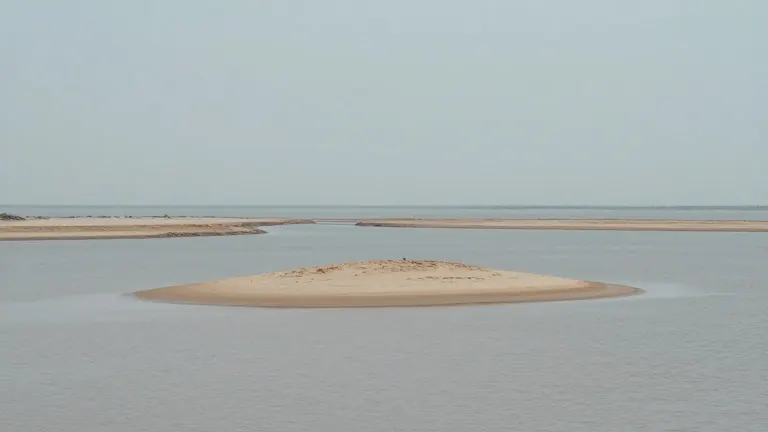
The creation of Fiesta Island involved the management of 25 million cubic yards of sand and silt dredged from Mission Bay.
City Engineer Ed Gabrielson documented the engineering decisions in a report titled Mission Bay Aquatic Park, published in the Journal of San Diego History. The report explains how the city resolved the problem of disposing of material unearthed during the bay's transformation.
Before the dredging began, the area known as Mission Bay was a tidal marsh, sometimes referred to as False Bay. Work to reshape the area for recreation started in the late 1940s and continued for several decades. The city needed a place to put the excavated soil rather than sending it to the ocean.
In 1956 and 1957, the Engineering and Planning Department drafted plans to dump millions of cubic yards of poor-quality soil into the Pacific Ocean. Public hearings generated strong opposition to that proposal. Gabrielson reported that the city then selected a new location within Mission Bay to serve as a disposal area.
The design for Fiesta Island was added to the project plan in 1958. The specifications called for 200-foot-wide sand levees around the island's margins. The plan also required a sand covering at least 3 feet deep. Contract drawings detailed the shorelines, slopes, and placement of different types of sand and silt.
The construction process faced a specific geological challenge on the north side of the site. The ground there held silty clay, which caused the sand to sink as much as 8 feet. This created a mud wave outside the levee. The city responded by widening the dike and removing extra amounts of material.
The city requested bids for the Mission Bay dredging work on June 12, 1958. Western Contracting Corp. received the contract, which was signed on September 4, 1958. The company's dredge, the Western Eagle, was built in Kansas City, Missouri. A 1968 California Court of Appeal opinion stated that the dredge's construction was finished on December 23, 1958.
The Western Eagle arrived in San Diego on April 30, 1959. Work under the Mission Bay contract began on May 6, 1959, according to Gabrielson's report. The project took years to complete. Western Contracting finished the dredging on August 1, 1961. Bulldozer and dragline work continued after that date. The city accepted the completed work in November 1961.
Source: Times of San Diego