Michigan Senate Race Tops $300 Million in Spending as Polls Show Narrow Lead
El-Sayed leads by four to seven points in unreliable polls, with AIPAC and pro-Trump groups pouring millions into the final days before the November 3 deadline.
By Olga Paredes ·
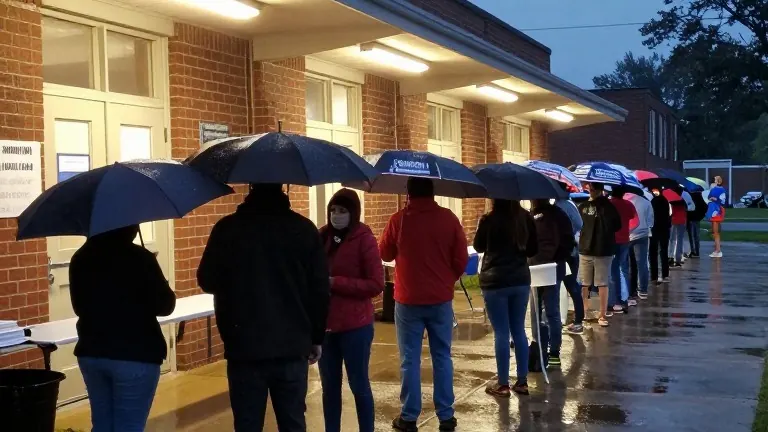
Voters in Michigan face a high-cost contest that could determine the balance of power in the US Senate. The race between Democratic nominee Abdul El-Sayed and Republican nominee Mike Rogers has drawn intense national and international attention, with campaigns and outside groups spending nearly $300 million. This figure makes it one of the most expensive Senate races in the country. Early voting is underway, and polls close at 8 p.m. Eastern Time on Tuesday, November 3.
Recent polling data places El-Sayed in a narrow lead of four to seven percentage points. However, the Cook Political Report classifies the race as a toss-up. Michigan’s diverse electorate of more than 10 million people has often defied polling predictions in recent decades. Both campaigns have warned that the outcome may hinge on a margin of only a few thousand votes. If the margin is tight, the winner may not be known until Wednesday morning, similar to the August primary result.
El-Sayed, a 42-year-old public health advocate of Egyptian descent, served as the head of the Detroit and Wayne County health departments. If elected, he would become the first Muslim US senator. He has championed progressive policies, including Medicare for All, and has sharply criticized Israel’s military actions in Gaza. His rival, 63-year-old Mike Rogers, is a former congressman and state legislator who lost a narrow Senate race in 2024. Rogers is a close ally of President Donald Trump, though he has attempted to distinguish his campaign from the president in recent weeks.
The conflict over Israel policy has become a central theme in the race. The American Israel Public Affairs Committee, or AIPAC, has spent tens of millions of dollars to support Rogers. According to The New York Times, AIPAC’s election arm, United Democracy Project, funneled $9 million to a Republican group backing Rogers. In the 2024 cycle, AIPAC spent over $30 million against El-Sayed’s primary opponent, Haley Stevens. Rogers has accused El-Sayed of prioritizing Palestine over Michigan, while El-Sayed has argued that taxpayer money is better spent on domestic issues like healthcare and infrastructure.
Haley Stevens, the Democrat who lost the August primary to El-Sayed, has re-entered the political spotlight. Stevens, a US House Representative, endorsed Rogers after her fiancé cited El-Sayed’s criticism of Israel. Stevens has criticized El-Sayed’s positions while stating she will still vote for the Democratic candidate. El-Sayed responded by saying the party must focus on defeating Trump’s hand-picked candidate rather than relitigating the primary.
Outside spending continues to flow from major political action committees. On the Republican side, Senate Leadership Fund, MAGA Inc, and Great Lakes Conservatives Fund have been significant spenders. On the Democratic side, the Senate Majority PAC and its affiliated group WINSENATE have led expenditures. The race serves as a test of progressive electoral viability in a swing state, with potential implications for the 2028 presidential cycle.
Abdulrazek, an Arab American activist volunteering for El-Sayed, said the vote is pivotal for Muslim and Arab communities facing Islamophobic attacks. He stated that supporters must demonstrate they are an integral part of the country. Former Democratic state legislator Cynthia Johnson described the negative campaigning around El-Sayed’s religion as a matter of life or death for local communities. Rob Cortis, a Rogers supporter, expressed urgency about the border and the future of children, stating that America was intended to be a nation of Christians.
Source: Al Jazeera