Kazakhstan Releases Second Tiger As Villagers Brace For Prey
A male tiger named Amur joined a female in a nature reserve, restarting a species absent from the country for roughly 80 years.
By Olga Paredes ·
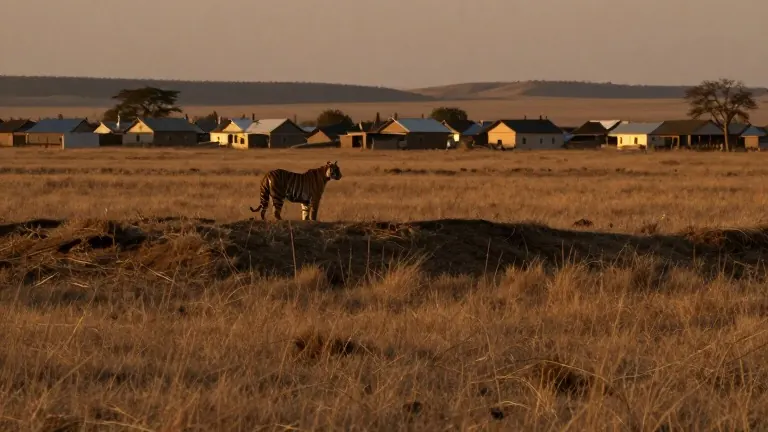
Kazakh villagers face a new predator in their pastures as the government releases a second tiger into the wild. The move marks the first time apex predators have roamed the country in nearly eight decades, creating immediate tension between conservation goals and local livestock farming.
The Ecology and Natural Resources Ministry announced on November 2 that a male tiger named Amur was released into the Ile-Balkhash State Nature Reserve. He joins a female tiger from Russia named Umit, who was released into the same area on July 31. The reserve is located approximately 300 kilometers northwest of Almaty.
Umit adapted quickly to her new environment. Within ten days of her release, she killed and consumed a boar and a wolf. Valery Bilyachenko, who operates a recreational fishing base near the release site, says locals are largely opposed to the project. He notes that livestock farming is the primary livelihood in nearby villages, and residents worry the tigers will kill their cattle.
The ministry has established protocols to manage conflicts. Both tigers wear satellite-tracking collars to monitor their movements. Automated text alerts will notify residents whenever a tiger comes within five kilometers of a village or farm. The government has also pledged to maintain roaming 'anti-conflict' teams that will be dispatched to scare the animals away if they approach human settlements.
Alibek Kuantyrov of the Ecology and Natural Resources Ministry stated that the goal is to establish a stable, independent breeding population. While there is hope the two current tigers will mate, experts assess the likelihood as low. Bilyachenko predicts little immediate impact on his business but acknowledges that future releases could change the dynamic.
The reserve was established in 2018 and specifically prepared for big cats. Authorities introduced more than 200 deer and over 100 kulans, a native donkey-like animal, to create a sustainable prey base. Two more young tigers are scheduled for release in 2027. The long-term target is a population of around 50 tigers roaming the wilderness.
The $30 million project is a joint effort funded by the World Wildlife Fund, UNDP, and Kazakhstan. The animals are sourced from Russia. Sergey Aramilev, director-general of Russia's Amur Tiger Center, said the project signals that restoring historically extinct large mammal populations is possible. He noted that no country has previously achieved this feat with a predator.
Source: RFE/RL