Open-source sleuths use shadows and signs to locate Ukrainian weapons plants
Russian analysts cross-reference minor visual details from public media to identify factory coordinates for strikes, a process that relies on combining scattered digital clues.
By Olivia Barnes ·
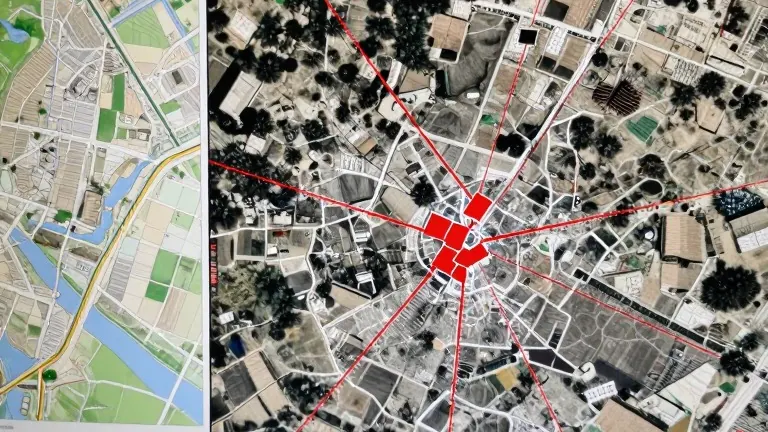
Russian military intelligence teams are identifying Ukrainian arms facilities by analyzing minor visual details in public media. They examine shadows, wall colors, and window shapes in videos and photos to pinpoint exact locations for missile or drone attacks. This method, known as open-source intelligence, turns accidental background footage into actionable targeting data. The process requires no secret codes or intercepted communications, only a steady eye for architectural and environmental quirks.
The technique gained attention after researchers located a base for Russia's Rubicon drone unit. A television crew filmed a report on the unit's successes but left identifying features in the background. Metal access hatches, specific ceiling lights, and a bilingual sign above a toilet gave away the site. The unit was actually stationed in exhibition pavilions at Patriot Park outside Moscow. This discovery proved that even casual filming can expose military positions.
Ukrainian defense companies face the same risk. A single press release photo or a blurred shot of a new weapon can reveal a factory's address. Russian analysts work in coordination with military intelligence agencies and security services. They combine open-source data with information from informants, purchased databases, and hacking operations. Major channels like Rybar and LostArmour maintain links to Russia's military apparatus and fund their investigations with state resources.
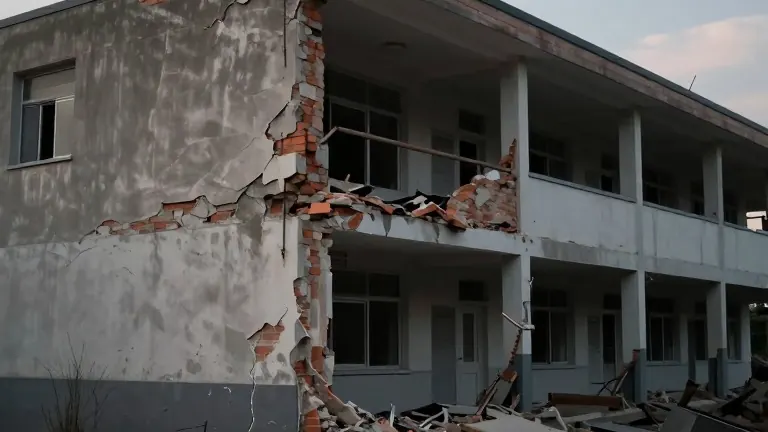
In April 2022, the channel Rybar identified a workshop at the Kyiv Armoured Plant from a broadcast by Ukraine's 1+1 channel. Investigators matched the wall color, window shapes, and ceiling height against satellite images. They cross-referenced these details with archive photographs of the plant. Two days after the footage aired, Russia struck the facility with missiles. The strike demonstrated how quickly visual data can translate into physical damage.
Andrii Lisitsyn, an investigator with InformNapalm, notes that Russians rely on combinations of details rather than single clues. They look at building shapes, road layouts, and railway tracks outside. Inside, they examine columns, overhead beams, and machinery. These elements narrow the search area when matched against old photos or employee profiles. The goal is to find a unique architectural fingerprint that matches only one location.
Vegetation and infrastructure also provide clues. The type of grass or tree species can indicate a region based on local climate data. Power lines offer precise geographic markers. Analysts measure the shape of pylon cross-arms and the angle of lines to determine the region. Tools like Shadow Finder calculate the exact time of a photo based on shadow length and direction. This data helps match the footage to specific satellite imagery from different dates.
Post-production editing must be rigorous to prevent leaks. Simple blurring is often insufficient because mathematical models can reverse Gaussian blur if the parameters are known. Pixelation also fails to guarantee anonymity, as neural networks can reconstruct obscured features from low-resolution images. Engineers and researchers have shown that these methods can produce plausible reconstructions of faces and objects. Therefore, cropping the image or using composite masking is often safer than standard blurring.
The next step for defense media teams is to review footage against multiple data sources before publication. They must check for reflections in glass or shiny surfaces, which can reveal nearby buildings. They should also verify that no distinctive vegetation or power structures appear in the frame. This careful screening helps prevent the accumulation of small clues that analysts can later combine to locate a target.
Source: Ukrainska Pravda