Huerta's grape boycott and farmwork legacy draw tributes across San Diego
Local leaders and community members recall the 96-year-old organizer's influence on labor rights and her personal interactions in the region.
By Olivia Barnes ·
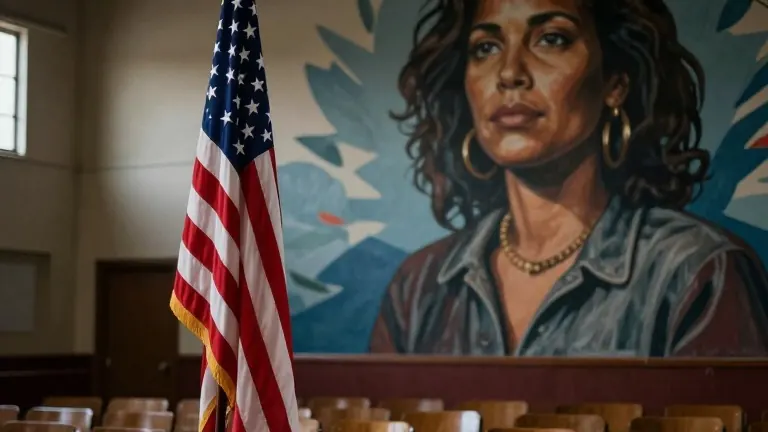
Dolores Huerta died Wednesday at age 96. The labor rights leader had spent decades organizing farmworkers, a role that shaped political movements in California and beyond.
Richard Chavez, 69, a resident of Chula Vista and Huerta's cousin, recalled a specific moment from nearly 50 years ago that solidified his understanding of her work. As a newlywed, he served his wife's fruit salad to Huerta. She asked if it contained grapes. Upon learning that it did, she refused to eat it. She did not explain her refusal at the time. Chavez later learned that boycotting grapes had become a symbol in the fight for farmworkers' rights. Huerta was a leader in that struggle.
"That was when I started to pay attention to the movement," Chavez said Wednesday. He described Huerta as "prima" to the family. He noted that she took charge everywhere she went and called her "badass."
Norma Chavez-Peterson, executive director of the ACLU of San Diego & Imperial Counties, stated that Huerta had literally inspired her life's work. Lorena Gonzalez, president of the California Labor AFL-CIO and a former state Assembly member, grew up idolizing Huerta. Gonzalez said she had to pinch herself when she later worked with Huerta in the labor movement. Gonzalez, who represented San Diego in the state Assembly, said Huerta showed generations of women and Latinas that there was a place for them in the labor movement. "There is no doubt we stand on her shoulders," Gonzalez said.
The Chicano Park Steering Committee said the flag at Chicano Park in Barrio Logan will be lowered to half-staff in Huerta's honor. Several murals of Huerta are located in the park. Assemblymember LaShae Sharp-Collins, who called Huerta a dear friend, described the labor leader as a trailblazer and a champion for justice in a statement. She said Huerta was a powerful voice for those who often went unheard.
San Diego Mayor Todd Gloria called Huerta a fearless champion for farmworkers. He described her as one of the most consequential civil rights leaders of the time. Shane Harris, a local civil rights advocate, said the country lost one of its greatest freedom fighters. He also said he lost a dear friend and fellow champion for justice.
Linda LeGerrette, 80, met Huerta about 60 years ago while in college. Drawn to the farmworker movement, LeGerrette and her husband left school in the late 1960s. They headed to Central California to participate. "You can't be in the farmworker movement without knowing Dolores," LeGerrette said Wednesday. She said she was always amazed by Huerta's actions.
The two women remained friends for decades. Huerta sometimes stayed at LeGerrette's home in San Diego. They often conversed over wine well into the night. LeGerrette described Huerta as funny, fearless, and open. She said Huerta loved music, particularly jazz, and enjoyed dancing. "She was strong," LeGerrette said.
Tonantzin Sanchez, vice president of the Chicano Park Steering Committee, recalled an incident from March. Sanchez's late father had marched with Huerta and Cesar Chavez. In March, news broke that Huerta had said Chavez had sexually assaulted her. That same day, a person vandalized a mural of Chavez at Chicano Park. Sanchez reached out to Richard Chavez to see if he could ask Huerta how to handle potential community pushback against Cesar Chavez. Richard Chavez spoke with Huerta immediately. He said she thought it was wrong to desecrate the mural and was upset about it. The message relayed to the steering committee was to let the dust settle. "Her response was not one of vindictiveness," Sanchez said. She added that the movement was bigger than just Huerta.
Source: The San Diego Union-Tribune