China's local debt: A fiscal squeeze that threatens urban development
With land revenue cut in half and borrowing rules tightened, local governments are cutting spending just as the IMF urges Beijing to stimulate growth.
By Alejandro Brooks ·
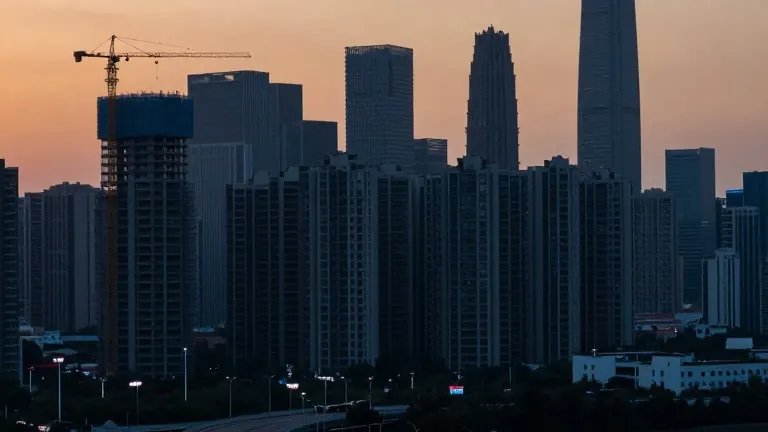
A sharp decline in local government spending in China has created a budget crisis that is slowing urban development. While international lenders urge Beijing to increase fiscal support, the local authorities responsible for building infrastructure are facing a severe shortage of funds. This mismatch between national goals and local reality has turned into a major drag on the economy.
The pressure stems from a collapse in land sales, which were the primary source of cash for local projects. From 2021 to 2025, land-sale income dropped from 8.7 trillion yuan to 4.2 trillion yuan, according to the CF40 think tank. That represents a loss of more than half the revenue. The drop coincides with a property slump that began in 2021 and continued through the following years.
Ting Lu, chief China economist at Nomura, calls this situation a true fiscal cliff. He estimates that combined fiscal spending fell by 3.5 percent in the first eight months of 2026. This is a reversal from a 3.6 percent growth rate seen in the same period last year. The decline has directly impacted construction, with urban fixed-asset investment dropping 7.2 percent in the first three quarters of 2026.
The central government has tried to manage the risk by restricting off-balance sheet borrowing. These hidden debts, held by local government financing vehicles, were once a key tool for expansion. Beijing has ordered these entities to clear their hidden debt and become market-oriented commercial firms by mid-2027. S&P Global Ratings notes that hidden debt shrank to 6.5 trillion yuan in 2025, down from 14.3 trillion yuan in 2023, but many of these groups still struggle to cover interest payments.
Despite the local struggles, the IMF argues that China has room to borrow. Kristalina Georgieva, the IMF managing director, stated that China needs to spend more while the U.S. and Europe save or invest. She noted that general government debt is at 68.4 percent of GDP, leaving space for additional stimulus. However, when including off-balance sheet borrowing, the total reaches 126.6 percent of GDP, a level comparable to developed markets.
Logan Wright, a partner at Rhodium Group, warns that local officials may prefer to default rather than continue struggling. He noted that no one wants to be the first to default, but once one does and Beijing steps in, others will expect the same treatment. This dynamic creates a tension between local priorities and central government goals. The IMF suggests moving away from specific growth targets to prevent excessive investment and misallocation of resources.
The next few weeks will offer more data on the economic situation. China's Communist Party holds its fifth plenary meeting from October 26 to 29. Industrial profits for the year to date are scheduled for release on October 27. The official manufacturing Purchasing Managers' Index for October will be published on October 31, followed by the RatingDog manufacturing PMI on November 2.
Source: CNBC
More Business · Consumer Watch · Report a business · Got a Story?