Amazon, Microsoft, and Google Build Giant Gas Plants to Power AI Data Centers
Corporate filings show tech giants are locking in decades of fossil fuel emissions, with new projects projected to match or exceed the output of major coal facilities.
By Olga Paredes ·
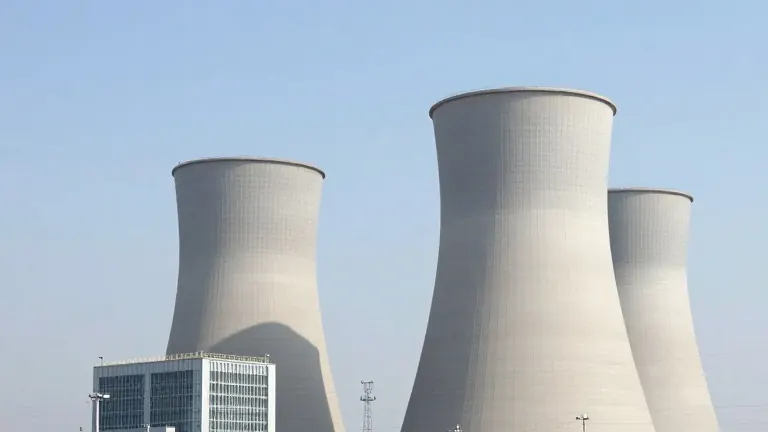
Amazon, Microsoft, Google, and Meta are constructing a new class of supersized gas-fired power plants to support the energy demands of artificial intelligence and cloud computing. According to corporate disclosures and an analysis by Harvard T.H. Chan School of Public Health researcher Gianluca Guidi, these infrastructure projects will lock in hundreds of millions of tons of climate pollution for the coming decades. The tech sector is transitioning from a minor industrial polluter to one of the world's largest greenhouse gas emitters, with some estimates projecting a fivefold increase in its share of global carbon emissions between 2020 and 2030.
Guidi noted that the physical infrastructure for AI requires land, power plants, transmission lines, water, and fuel. These choices create long-term commitments that persist even if the technology evolves. His analysis relied on air permits, community presentations, and materials collected by the research firm Cleanview. The findings indicate that data center emissions are on track to double, reaching 643 million tons of CO2 annually by 2030, according to a June report from insurance giant Allianz.
Amazon’s carbon footprint reached 80.85 million metric tons in 2025, a 58 percent increase from the level when founder Jeff Bezos pledged in 2019 to meet Paris agreement targets early. The company has moved away from the trajectory required to reduce emissions by 43 percent below 2019 levels by 2030. Two recent gas projects signed by Amazon for data centers in Texas and Pennsylvania will produce more carbon pollution than the James H. Miller Jr. coal plant in Alabama, which serves one million homes. The pollution from these two gas plants alone equals a 28.5 percent increase over Amazon’s current reported greenhouse-gas footprint.
Meta is developing a nearly six-square-mile campus in rural Louisiana that will consume electricity equivalent to three cities the size of New Orleans. The gas plants powering this operation will create more carbon emissions than the entire Meta corporation currently generates, based on its latest sustainability disclosures. In West Texas, a sprawling Microsoft project involves a giant gas plant built by Chevron. A separate Google project in Wyoming will consume five times as much electricity as every household in that state. A data center campus in Pike County, Ohio, supporting OpenAI, will emit more carbon pollution than the Microsoft and Google projects combined. Anthropic is also signing on to large gas projects in West Virginia and the Memphis area.
Tech executives argue that rapid expansion is necessary to compete with China in the AI innovation race. Meta told Louisiana regulators last year that the gas plant was crucial for speed to market. Amazon spokeswoman Margaret Callahan stated that a recent Texas deal is one piece of a larger picture that includes the world's largest portfolio of carbon-free energy. She said Amazon has invested billions of dollars to enable more than 712 carbon-free energy projects totaling 42 gigawatts worldwide. Microsoft reported matching 100 percent of its annual global electricity consumption with renewable energy last year. Meta pointed to contracts for 30 gigawatts of clean and renewable energy across seven countries and 28 U.S. states.
Climate experts warn that market-based accounting and carbon credits do not change the physical reality of adding new gas-fired plants. Thomas Day, director of corporate accountability at the New Climate Institute, described the trend as a disaster from a climate perspective. He said the companies are locking in huge fossil fuel projects that will become some of the biggest emitters in the world. Day added that these are not one-off incidents, as more projects appear with no end in sight. Allianz calculated that absent a rapid pivot to cleaner energy, the tech sector’s emissions threaten to create about $164 billion in annual climate damages, including property destruction and supply chain deterioration.
Industry officials argue that AI advancements will help unlock technological solutions to reverse warming. Some firms have discussed deploying carbon-capture machinery to compress greenhouse gas into liquid carbon for underground burial. However, almost none of the new gas megaprojects include this equipment. In regulatory filings, companies cite the steep cost, environmental challenges, and delays associated with carbon capture. One data center developer said the technology is not yet available at a market-cost-efficient level or on the required timetable. Guidi noted that once billions of dollars are invested in a gas plant, there is a strong incentive to keep using it for a generation or two, shaping emissions long after current AI hardware becomes obsolete.
Source: Alaska Star
More Business · Consumer Watch · Report a business · Got a Story?