Russia Targets Miners and Investors in New Tax Hikes
The Kremlin proposes steep levies on mining profits and personal investment income to cover a budget deficit that has ballooned to 72 billion dollars.
By Alejandro Brooks ·
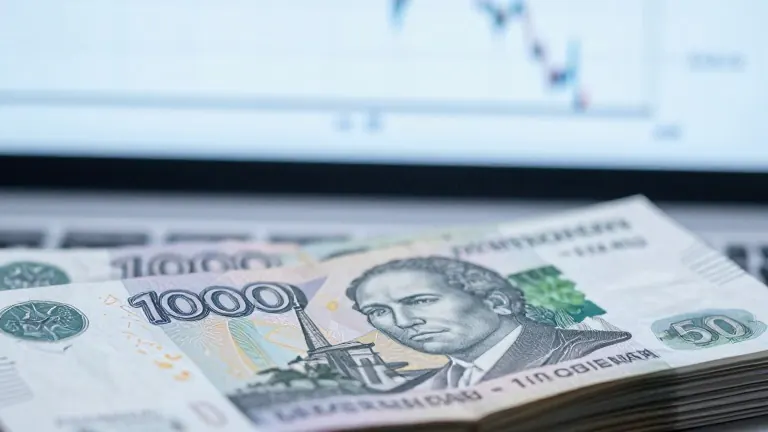
The Russian government is preparing a new round of tax increases to fund its war effort against Ukraine. The 2027 to 2029 state budget, scheduled for a vote in parliament this Thursday, introduces specific levies on the mining sector and high-income individuals. These measures follow a broader tax reform implemented last year, which raised value-added tax for consumers and expanded the base of small businesses subject to the charge.
The primary target of the new fiscal policy is the extraction industry. The proposal includes a windfall profits tax ranging from 20% to 30% for companies producing iron ore, nickel, and gold. This tax applies to firms that have seen revenue growth since the previous year due to rising commodity prices. The government aims to capture a larger share of these gains to offset the costs of military operations.
The budget also imposes higher rates on personal investment income. Rates for interest, dividends, and proceeds from property sales will increase to a range of 13% to 22%. Currently, such income is taxed at 13% for amounts under 2.4 million rubles, or approximately 29,800 dollars, and 15% for amounts above that threshold. The new structure places a heavier burden on those with larger portfolios and property holdings.
Additional costs for consumers and foreign investors will take effect on January 1. Online purchases of foreign goods valued under 200 euros, previously exempt from tax, will be subject to a 22% value-added tax. A flat fee of 100 rubles per parcel will also apply. Furthermore, a 35% tax will be levied on dividends paid into restricted accounts for foreign investors from countries designated as unfriendly by Moscow.
The urgency of these measures stems from a widening budget deficit. Through August, the deficit reached 5.8 trillion rubles, or 72 billion dollars. This figure is nearly 50% higher than the same period last year and exceeds the revised annual target of 4.8 trillion rubles. Chris Weafer, CEO of Macro-Advisory Ltd., noted that the budget is shifting its focus almost entirely to military funding. He stated that this leaves less capital for infrastructure and normal economic development.
Russia retains some financial buffers, though they are depleting. The National Wealth Fund, built from oil and gas exports, has liquid assets equivalent to only 1.7% of GDP. The government has also relied on domestic bank loans to finance defense contractors, shifting costs off the federal balance sheet. Finance Minister Anton Siluanov projects the deficit will stabilize at 3% of GDP this year. While this is higher than the 1.6% recorded last year, it remains below the 5.8% deficit reported by the United States last year.
On the street, residents of Moscow expressed a mix of resignation and understanding regarding the new costs. Denis Bystrov, 39, said the state needs to collect more from ordinary people. Sergei Sukachev, who described himself as almost 70, acknowledged that the money is going toward the military operation. Nelly Godunova, 92, remarked that if one has earned wealth, one must give something back. The government continues to tap into available resources to maintain its fiscal position.
Source: ABC News
More Business · Consumer Watch · Report a business · Got a Story?