SpaceX plans to retire Falcon 9, leaving NASA with a ride gap
As the company shifts focus to its larger Starship rocket, the end of Falcon 9 flights threatens to leave the International Space Station without a primary American crew transporter after 2028.
By Alejandro Brooks ·
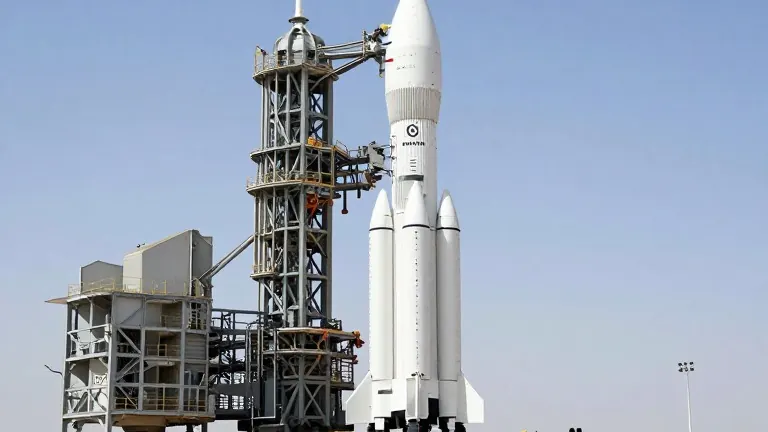
SpaceX will attempt a critical test of its Starship rocket later today, aiming to launch from South Texas, orbit the Earth, and return to the same pad 22.5 hours later.
This trial marks a major step for a vehicle Elon Musk intends to use for crewed missions to Mars. However, the rapid advancement of Starship creates a logistical problem for NASA, which relies on the smaller Falcon 9 rocket to launch the Dragon capsule. The Dragon is currently the only American spacecraft designed to carry astronauts to and from the International Space Station.
SpaceX has indicated it will discontinue Falcon 9 launches to free up engineering and production resources for Starship. Caleb Henry, director of research at Quilty Space, noted that the Dragon capsule became the standard method for astronauts to reach orbit due to its reliability. A September announcement confirmed NASA has contracted for three additional International Space Station flights, which would support Dragon operations only through 2028 if flown in six-month intervals.
The space station is scheduled to retire in 2030. This situation reverses the company’s historical dependence on the agency. In 2008, SpaceX faced financial ruin after multiple Falcon 9 failures. Musk later recalled receiving a life-saving contract from NASA just before Christmas, stating, "I couldn't even hold the phone, I just blurted out, 'I love you guys!'" For the following decade, government contracts from NASA and the Pentagon formed a large portion of the company's income.
SpaceX’s financial priorities shifted in 2020 with the launch of its Starlink satellite internet service. According to the company's latest financial report, Starlink generated approximately $12.8 billion in revenue through September, while space launches contributed $2.1 billion. The company's AI division added another $10.9 billion. SpaceX President Gwynne Shotwell compared the Falcon 9 to a minivan, arguing that the company should move toward newer technology for long-term goals like Mars travel.
The retirement of the Falcon 9 will affect the commercial launch market as well. Quilty Space estimates a shortfall of 150 commercial launches between now and 2030. The U.S. Space Force stated it has secured Falcon 9 launches through 2028 and expects other suppliers to fill remaining gaps. Tim Farrar, president of TMF associates, observed that NASA missions are no longer a major financial driver for the company, noting that they are "small potatoes" compared to other revenue streams.
It remains unclear when SpaceX will fully retire the Falcon 9. Shotwell suggested that Boeing, whose Starliner capsule has faced technical difficulties, could take over crewed station flights. Boeing's next test flight is scheduled for this winter, with a crewed mission planned for 2028. Farrar questioned whether the agency deserves a different outcome, pointing out that NASA's early support prevented SpaceX from going bankrupt.