France Accuses Iran of Sabotaging 700 Retail Refrigeration Units
The Paris Prosecutor's Office is seeking international arrest warrants for the Iranian military cyber unit Shahid Kaveh following the October attacks.
By Olga Paredes ·
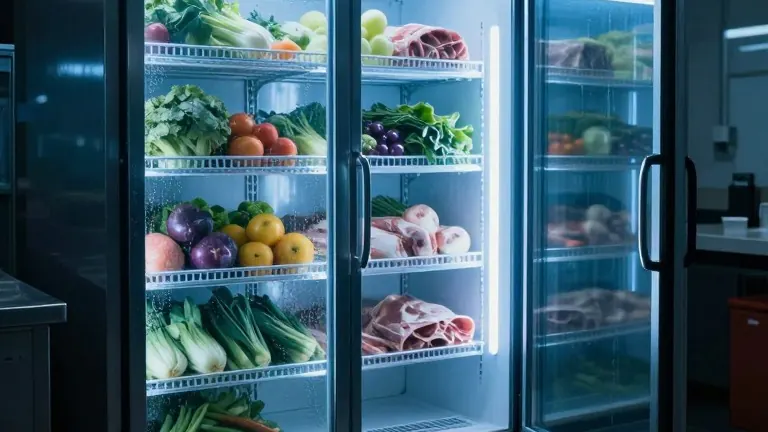
Approximately 700 retail sites in France experienced refrigeration failures last month, resulting in the spoilage of millions of dollars' worth of food. The French government formally attributed the destructive cyberattacks to Iran on Monday, marking the first official assignment of blame for the recent wave of incidents affecting cooling systems across the Atlantic and the Middle East.
The French National Cybersecurity Agency, ANSSI, reported that Iranian military hackers accessed refrigeration controllers in supermarkets and butcher shops. The attackers raised the temperature settings in the middle of the night, causing inventory to decay. ANSSI also confirmed that the campaign targeted several small hydroelectric power plants, which suffered what the agency described as moderate effects. The French Foreign Minister, Jean-Noël Barrot, characterized the operation as the first large-scale cyberattack aimed at sabotage on French national territory.
The Paris Prosecutor's Office has opened an investigation into the Iranian cyber unit Shahid Kaveh, which the French government links to the Islamic Revolutionary Guard Corps. The office stated that it is requesting the issuance of international arrest warrants. ANSSI identified the hackers through digital infrastructure, connections to a propaganda outlet, and traces of Farsi language code within the attack signatures.
The attacks on France represent a continuation of a pattern observed in 2026. Grocery stores in Sweden and Ireland faced similar disruptions last week. In a separate incident in France, employees at a major blood bank manually cooled samples after their refrigeration systems failed. In Israel, suspected Iranian hackers claimed responsibility for sabotaging an industrial food processing plant in the spring, while U.S. military commissaries experienced food spoilage over the summer after overnight temperature spikes.
Security analysts note that the targeting of operational technology, such as water pumps and cooling systems, presents a persistent challenge for defenders. These machines are often outdated, difficult to patch without disrupting services, and frequently exposed to the open internet to allow for remote vendor maintenance. Ari Ben Am of the Foundation for the Defense of Democracies described Shahid Kaveh as an offensive unit responsible for major Iranian cyber operations, including previous attacks on water treatment plants and digital kiosks at the 2024 Paris Olympics.
Secretary of State Marco Rubio, attending a G7 meeting in Paris, declined to comment on information sharing with France but stated that the French are quite capable. He questioned the strategy of attacking refrigerators, noting that France is not directly involved in the current conflict between the United States and Iran. Iran has not yet responded to the accusations.