NASA Estimates 22 Starship Launches Needed for Lunar Landing
A new internal assessment suggests the Artemis program will require significantly more orbital fueling trips than previously hoped.
By Wei Zhang ·
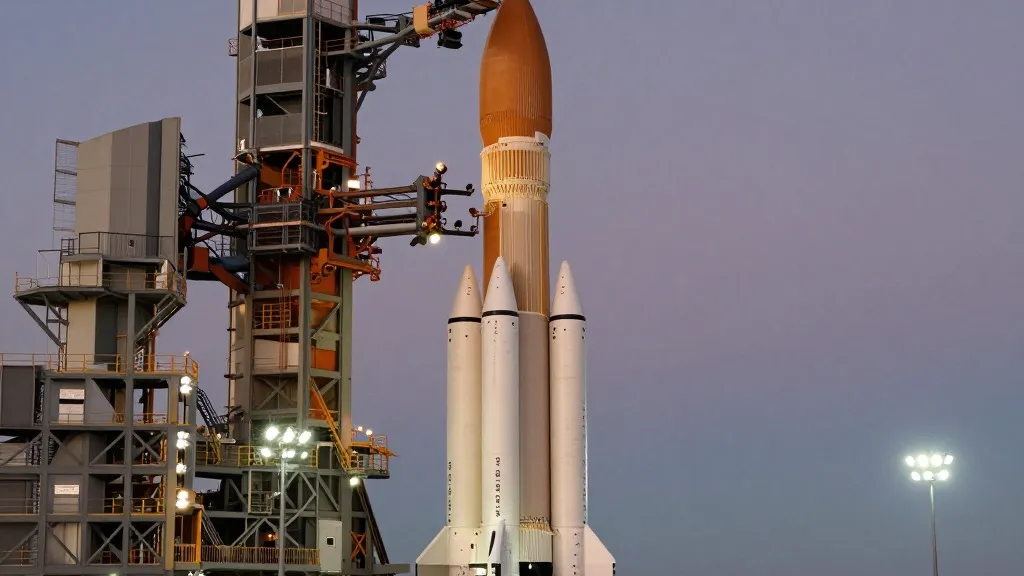
NASA has officially pegged the number of Starship launches required to fuel a crewed lunar lander at 22, a figure that marks a significant shift from earlier, more optimistic projections. This estimate emerged during the agency's most recent quarterly safety review, signaling a potential recalibration of the Artemis program's logistical planning. For non-experts, this number represents the count of orbital refueling missions SpaceX must complete to fill a tanker ship with enough liquid oxygen and methane to send a lander to the Moon and bring it back to lunar orbit.
The revelation comes from Charlie Precourt, a former NASA astronaut and member of the Aerospace Safety Advisory Panel. During the panel’s meeting held this week, Precourt discussed the various risks associated with returning humans to the lunar surface. His comments highlighted a growing consensus among some agency officials that the current trajectory of Starship development may not align with the tight timeline for a crewed Moon landing this decade. The number 22 is not a static goal but rather the latest snapshot of a complex engineering equation that has fluctuated for years.
For years, NASA has been tight-lipped about this specific metric, treating the required launch count with a level of secrecy usually reserved for classified data. The agency’s standard response to inquiries has often been a cautious non-answer, suggesting that they are still gathering data. This opacity has led to significant speculation in the aerospace community about the true scope of the orbital fueling operations required for the Human Landing System. The agency has historically preferred to let the numbers speak through actions rather than explicit statements, which has kept the exact requirements in a state of flux.
In 2023, Lisa Watson-Morgan, who served as the director of NASA’s Human Landing System, provided some clarity while maintaining ambiguity. She noted that while the agency had a general understanding of the requirements, she was reluctant to commit to a specific number. She later described the figure as falling within the "high single digits to the low double digits" range. This phrasing implied a requirement of roughly a dozen launches, a number that, while substantial, was considered manageable if SpaceX could maintain a high launch cadence and reliable performance.
The discrepancy between the earlier "low double digits" estimate and the new figure of 22 reflects ongoing concerns about the rate of improvement in Starship’s lift capacity. NASA’s initial hope was that SpaceX would significantly increase the payload capacity of the rocket, thereby reducing the number of tanker flights needed to fill the lander. However, if the lift capacity does not improve as rapidly as anticipated, the number of necessary launches will remain higher. This directly impacts the schedule, as each launch requires time for preparation, execution, and orbital rendezvous.
The logistical challenge involves launching a "depot" version of Starship into low-Earth orbit first. This depot then serves as a stationary refueling station. Subsequent "tanker" Starships are launched to transfer propellant into the depot. The process must be repeated multiple times until the depot holds enough fuel for the crewed lander to travel to the Moon, land, and return. If 22 launches are required, that means 21 tanker flights must successfully dock with the depot after the initial depot launch. This multiplies the opportunities for mechanical failure or mission delays, a key risk factor for the safety panel.
Contextually, this new estimate arrives as NASA balances the need for a timely Moon landing with the imperative of safety. The Artemis program has faced numerous delays, and the reliance on a single commercial partner for a critical, untested operation adds complexity. The shift to a higher launch count suggests that the agency is preparing for a more conservative scenario, one that prioritizes reliability over speed. This approach may extend the timeline for the first crewed lunar landing but could reduce the overall risk to the astronauts involved.
Looking ahead, the figure of 22 serves as a baseline for future planning. It is not a final cap, as technological improvements could still lower the number. However, it sets a concrete benchmark for the next phase of testing. Stakeholders in the Pacific Northwest and beyond will be watching to see if SpaceX can demonstrate the reliability and cadence needed to execute this many launches in a short window. The next few months of test flights will be critical in determining if this estimate holds or if further adjustments are needed.
The transparency of this new estimate, while late, provides a clearer picture of the challenges ahead. It moves the conversation from vague estimates to specific operational requirements. For the Artemis program, the path to the Moon is now defined by a specific number of rockets that must lift off, dock, and refuel. This clarity allows for better resource allocation and risk management, even if the number itself is higher than previously preferred.
Source: Ars Technica