Autonomy Delay: Tesla's FSD Timeline Slips to 2027
Tesla has pushed its unsupervised driving rollout to the second quarter of next year, restricting the feature to specific managed zones rather than open roads.
By Thomas Reynolds ·
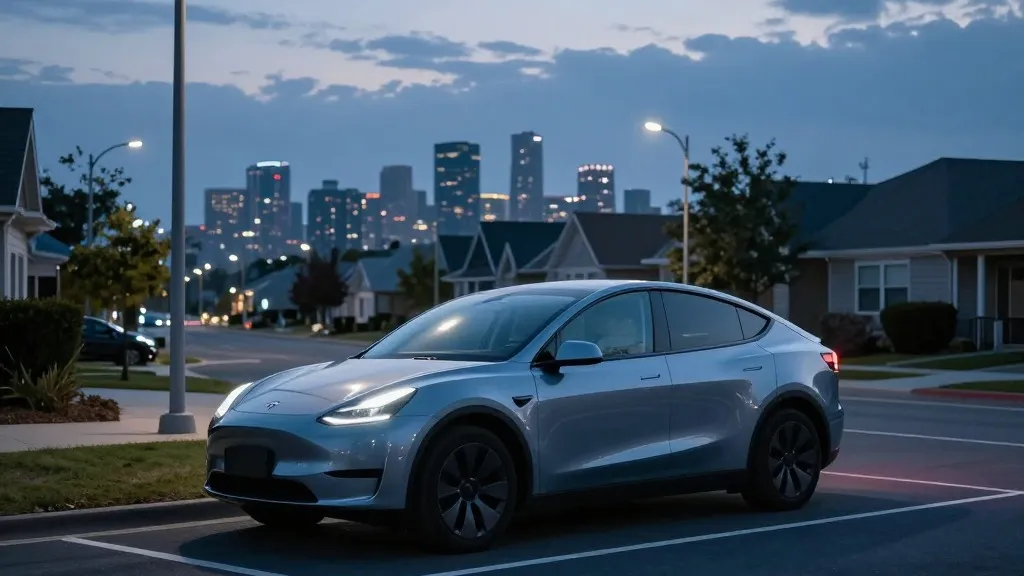
Approximately 1.1 million shares backed a single, pressing question from retail investors during Tesla’s Q3 2026 earnings call today: when will unsupervised Full Self-Driving (FSD) finally arrive in customer-owned vehicles? The answer from the company’s AI chief, Ashok Elluswamy, was the second quarter of 2027. This marks the latest iteration in a promise that CEO Elon Musk has been making to FSD buyers for nearly a decade.
The new timeline is not without significant caveats. Elluswamy clarified that the initial rollout will not function as a standard software update that allows owners to sleep in the back seat of their Model Y while it navigates to any destination. Instead, the feature will effectively integrate individual owner vehicles into Tesla’s managed Robotaxi fleet. This means the autonomous capabilities are tied directly to the operational parameters of Tesla’s existing Robotaxi network.
Currently, that network is geographically limited. Tesla’s Robotaxi service operates in six U.S. metropolitan areas, but the service areas often cover only small, specific slices of those cities. For instance, the Miami zone primarily encompasses West Miami and a narrow strip extending toward Doral and Sweetwater. Orlando and Tampa, which launched in July, also feature similarly restricted geofences. Within these designated zones, the vehicles adhere to low-speed routes, largely avoid highways, and steer clear of complex urban environments.
A notable exception exists in the San Francisco Bay Area, where the service is not yet unsupervised. Due to California regulations requiring the release of specific data to the California DMV for systems beyond a Level 2 autonomous classification, Tesla has chosen to retain safety drivers in every car. The company has indicated it does not wish to release this data, effectively halting unsupervised operations in the region despite its high-profile presence.
The scale of the current operation remains modest compared to earlier projections. According to Tesla’s Q3 2026 results, the Robotaxi fleet accumulated nearly 2 million unsupervised miles by the end of the quarter. This milestone came just one month after the Cybercab model joined the fleet in Austin. However, third-party tracking data from earlier this spring suggested that the number of fully driverless Teslas on the road was in the dozens, a figure significantly lower than the hundreds of thousands Musk had previously discussed.
The competitive landscape adds further context to these numbers. Waymo, a key competitor, had already established operations in both Orlando and Tampa before Tesla entered those markets. By the end of the third quarter, Waymo had logged over 3 million miles, surpassing Tesla’s cumulative total in that specific metric.
The discrepancy between the original sales pitch and the current product definition is stark. For years, the value proposition for FSD buyers was the eventual ability to drive anywhere through a simple update. In July 2025, Musk told investors that unsupervised FSD would be available for personal use in certain geographies by the end of that year. A year prior, he had expressed surprise if the technology was not ready by the following year. Now, the target is Q2 2027, and the scope is narrower: owners’ cars join Tesla’s fleet, operate within Tesla’s zones, and follow Tesla’s terms.
Hardware limitations also play a role in the delay. Owners of the HW3 computer platform, who purchased FSD, have already been informed that their hardware cannot support unsupervised FSD. There is currently no clear upgrade path for these owners. Elluswamy reiterated on the call that safety remains the primary bottleneck, which is why Tesla restricts its operations to lower-speed roads and avoids more challenging environments. He expressed confidence that these safety issues could be resolved by next year, though he acknowledged uncertainty regarding the exact timing.
The shift in strategy represents a significant change in the consumer experience. Instead of a car that drives its owner anywhere, the vehicle becomes part of a managed fleet within a controlled geofence. This excludes highway road trips and cross-town commutes unless both the origin and destination fall within the active Robotaxi zone. For investors and customers alike, the Q2 2027 date is the latest in a series of revised timelines, with the current product definition offering less autonomy than originally marketed.
Tesla’s position in the autonomous driving race continues to evolve as it navigates regulatory hurdles and technical constraints. The company’s focus on integrating owner vehicles into its Robotaxi network suggests a strategic pivot toward managed services rather than fully decentralized personal autonomy. As the second quarter of 2027 approaches, the market will be watching to see if Tesla can deliver on this narrower promise while expanding its geographic footprint.
Source: Electrek