Border clashes in Ethiopia push 50,000 into Kenya
Displaced residents face disease and scarcity as host communities in Moyale struggle to absorb the influx.
By Alejandro Brooks ·
Violence along the Kenya-Ethiopia border has forced more than 50,000 people to flee their homes, a surge that has overwhelmed local resources and strained diplomatic ties. The conflict, rooted in a dispute between two Ethiopian regional administrations, has spilled over into Kenyan territory, creating a dual crisis of displacement and economic disruption.
The Kenya Red Cross regional head, Malik Adan, reported that the number of displaced individuals has climbed from an estimated 36,000 to over 50,000. This figure includes those in temporary settlements and those staying with host families. A government-led assessment conducted on October 29 and 30 previously counted 35,950 displaced people as of October 24. The total number remains unverified, with no final figure confirmed by independent bodies.
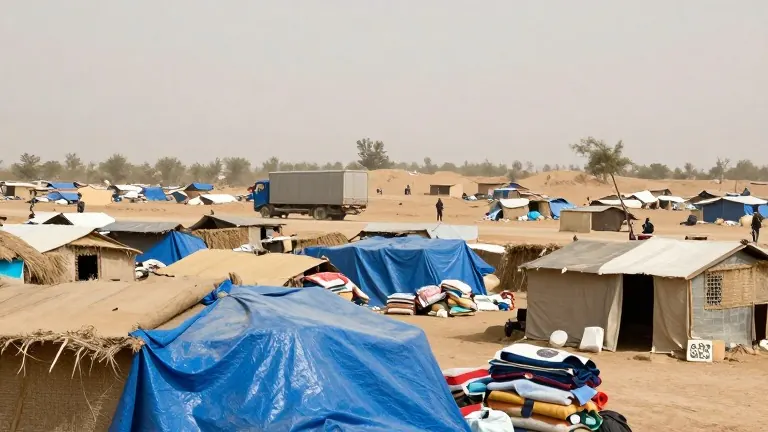
Hawa Hassan, a resident of the Moyale area, described fleeing her home after it was burned. She recalled seeing a 13-year-old girl shot near a wall, a detail she linked to tensions over flag displays. Her account could not be independently verified. Many women in her group gave birth during the flight, and newborns arrived in Kenya sleeping on bare floors. Diarrhoea and fears of malaria have spread among the arrivals, who often lack food, cooking utensils, or bedding.
The fighting stems from a long-standing dispute over land and administrative control between Ethiopia’s Oromia and Somali regions. Tensions escalated around October 18 when the Somali regional flag was raised in the disputed Moyale area. For those crossing into Kenya, the immediate concerns are shelter and food, though the politics of the border dispute continue to shape the crisis.
Kenya’s acting commissioner for refugee affairs, Mwasaru Mercy, stated that a multi-agency team is coordinating with the UN High Commissioner for Refugees. Gunfire was still audible in Moyale as of her interview. Mercy noted that there are no contingency food stocks for this abrupt incident. A refugee camp has not been established yet, pending improved security. Authorities are working to register arrivals and assess their needs, which include shelter, food, and healthcare.
Fatima Mohammed Cole, the UNHCR representative in Kenya, said many arrivals are women and children spread across six sites. She appealed for a ceasefire to allow families to return home. The Ethiopian Red Cross Society is providing emergency shelter and household items worth about 30 million Ethiopian birr to 1,000 households displaced from Moyale town and surrounding areas. This operation is separate from assistance provided in Kenya.
Host communities in Kenya are feeling the pressure. Abdi Maalim, a member of the Moyale Cross-Border Peace Committee, said some families moved inland after bullets and heavy weapons landed near their homes. Families that once fed five or six people are now feeding 20 or 30. Maalim called for more border patrols to prevent armed groups from crossing.
The disruption has hit the local economy hard. Trucks carrying goods between Mombasa and Addis Ababa have been stranded near the border for almost two weeks. Bank closures have disrupted the circulation of the Ethiopian birr, and traders reported price rises of about 20 percent. The Moyale Cross-Border Peace Committee is working to maintain order as businesses slow.
Security analyst Dr. Abdiwahab Sheikh Abdisamad warned that the clashes have grown beyond a local dispute, exposing deeper ethnic divisions. He noted that perceptions of Oromo expansionism risk deepening mistrust between regional administrations. He described the situation as both a Kenyan security concern and a refugee emergency due to stray bullets and further displacement.
Kenya’s Inspector General of Police, Douglas Kanja, said about 10,000 people are staying in temporary shelters and public institutions. He confirmed that one Kenyan died from a stray bullet and that an Ethiopian man died from gunshot wounds in Kenya. Kanja visited Moyale on November 5 and said Kenya is engaging Ethiopia’s federal government to end the conflict. He stated that additional officers would be deployed along the border to strengthen security.