Don't call back: RCMP warns Ontarians about fake police numbers
Scammers are spoofing the agency's Ontario communications centre line to trick residents into sharing personal details.
By Olga Paredes ·
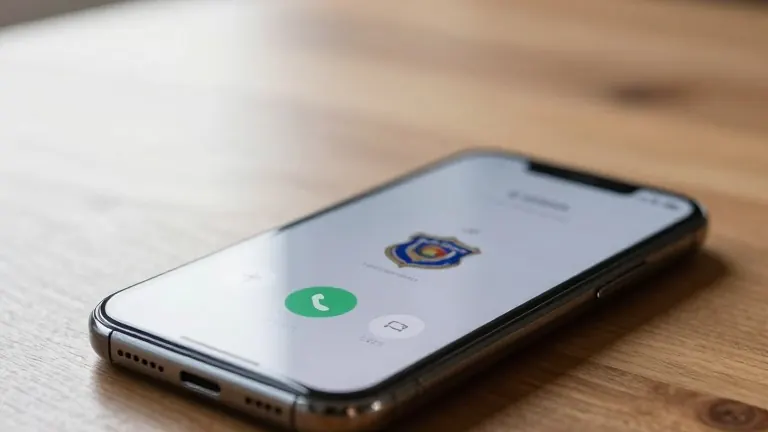
Residents in Ontario should ignore the number on their phone screen if they receive a call from someone claiming to be a Royal Canadian Mounted Police officer. The agency issued a new alert on social media this week warning that its Central Region Operational Communications Centre phone number has been spoofed. The RCMP urged people not to dial back the specific number provided by the caller and to withhold personal information during these interactions.
The warning advises victims to verify the caller's identity by contacting their local detachment directly. This step helps confirm whether the police actually reached out or if the call was a fabrication. The agency noted that this tactic is part of a wider pattern of fraud involving impersonation. Scammers have recently threatened Ontarians with fake court delivery notices, false accusations of serious crimes, and demands for payment to release a loved one from jail.
Caller ID spoofing involves manipulating the data displayed on a recipient's phone to show a different number than the one actually dialing. According to the Canadian Radio-television and Telecommunications Commission, this technology has legitimate uses. Call centre agents sometimes alter their caller ID to display a client's name or number. Doctors may also use the feature to show a hospital's general callback number when discussing lab results with patients.
However, the CRTC acknowledges that the technology is also used for illegitimate purposes. Telemarketers may spoof numbers to trick people into answering calls. Some fraudsters use a practice called neighboring, where they match the first six digits of the receiver's phone number to make the call appear local. This increases the likelihood that the recipient will answer.
In Ontario and across Canada, scammers frequently use spoofing to display numbers associated with trusted institutions. These include local banks, police forces, and government agencies like the Canada Revenue Agency. Courthouse numbers are often spoofed in grandparent scams, where fraudsters claim a relative is in legal trouble.
Toronto cybersecurity expert Edward Kiledjian told Metroland Media that caller ID is easily spoofed using widely available tools. He stated that the number displayed on a screen is not proof of who is calling. The RCMP has used this deceptive tactic across North America for many years, and the agency is now specifically flagging the spoofing of its own central line to protect residents in the province.
Source: Burlington Post