Democratic Edge in House Races Narrows Amid Voter Enthusiasm Gaps
A new poll shows Democrats holding an 8-point lead among likely voters, but key demographic groups show lower turnout enthusiasm than their Republican counterparts.
By Olga Paredes ·
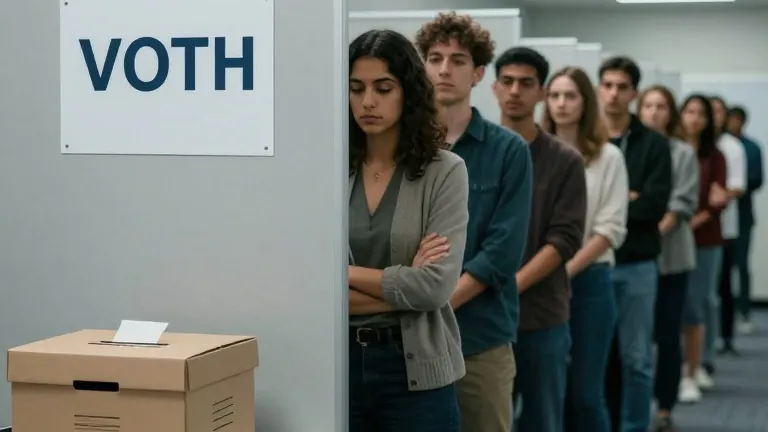
Democrats face a narrow path to reclaiming the House, according to a new survey indicating that while they hold a lead on the generic congressional ballot, structural shifts and voter fatigue may limit the size of their gains. The data suggests a race where the margin of victory is tighter than previous midterm cycles with similar polling numbers.
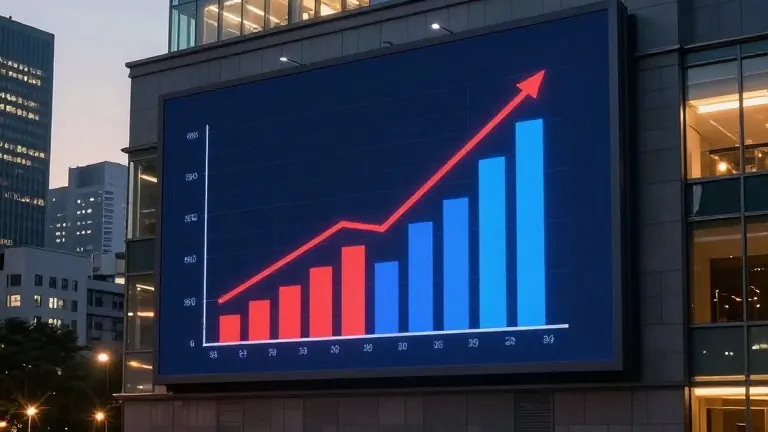
In the NPR/PBS News/Marist poll conducted October 19 and 20, Democrats held an 8-point advantage over Republicans among likely voters on the generic congressional ballot. This lead was slightly smaller than the 10-point gap seen among all registered voters. Historically, Democratic leads of this magnitude have resulted in winning the House by at least 30 seats, as occurred in 2006 and 2018. However, those precedents predate recent redistricting changes that have tilted the map in favor of Republicans.
President Donald Trump’s standing remains a central factor in voter motivation. Only 37% of likely voters have a favorable impression of the president, while 59% hold a negative view. His job approval rating sits at 40% approval and 59% disapproval among likely voters. Despite these low numbers, 53% of both registered and likely voters strongly disapprove of his performance, a level tied for the highest recorded in this polling series.
Voter enthusiasm presents a complex picture for the Democratic Party. While Democratic likely voters are 10 points more likely than Republicans to be very enthusiastic about voting, key coalition groups show lower engagement. Only 42% of likely voters under 45 and 53% of non-white voters reported being very enthusiastic. In contrast, 68% of MAGA voters and 66% of white women without college degrees expressed high enthusiasm. This gap is notable because younger and non-white voters historically turn out at lower rates in midterm elections.
The poll reveals a growing divide among independent voters. Matthew Schroder, a 38-year-old independent in Charlotte, North Carolina, said he is voting for a Republican because he opposes the Democratic Party’s move toward democratic socialism. He stated that his vote is not necessarily for Trump but against a perceived shift in the party’s direction. This sentiment aligns with 44% of likely voters who said their vote was against Trump, compared to 21% who voted for him.
Issues driving voters include the cost of living and the state of democracy. A third of respondents reported experiencing financial hardship in the past year, while 4 in 10 said their personal finances have worsened. Shun Maurice, a 47-year-old independent in Arizona, cited high food and gas prices as primary concerns, noting that costs are high regardless of past voting choices. Meanwhile, 55% of likely voters said it is more important to elect candidates who bring new ideas and change.
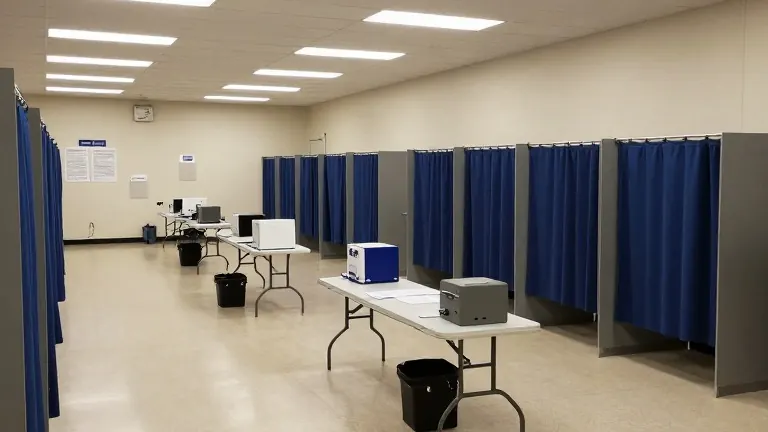
Confidence in the election process remains high but is not uniform. Three-quarters of likely voters believe their state and local governments will run a fair and accurate election. However, Republicans are 20 points less likely than Democrats to hold this view. A quarter of Republicans indicated their preferred candidate should probably or definitely challenge the results if they lose. This skepticism is most pronounced among MAGA supporters, who are twice as likely as other groups to say their candidate should challenge the outcome.
The poll of 1,289 registered voters carries a margin of error of plus or minus 3.7 percentage points. When restricted to likely voters, the margin is plus or minus 3.8 points. This is the first survey in the current cycle to apply a likely voter screen, a methodology used to estimate the subsample of people most probable to cast a ballot based on enthusiasm and voting history.
Source: KNKX Public Radio