Garrett Brown's Steadicam Redefined Cinema and Carried Rocky to the Summit
A new film examines how the inventor's custom-built harness captured the iconic Philadelphia steps sequence and transformed sports broadcasting.
By Alejandro Brooks ·
Garrett Brown invented a camera stabilizing system that changed how movies and live sports are filmed, a technique that became central to the 1977 Academy Award winner Rocky. The new film I Play Rocky chronicles the making of Stallone's underdog story and credits Brown for the smooth, immersive visuals that defined the movie's most famous training sequence.
Brown developed the device after growing frustrated with the limitations of existing camera tools. He noted that large dollies were too cumbersome while handheld cameras produced shaky, unrealistic images. In 1974, he locked himself in a hotel room for a week until he sketched a solution. The resulting Steadicam used a harness strapped to the operator's chest rather than being held in the hands. An arm extended from the harness to a gimbal that isolated the camera from the operator's angular movements.
To operate the rig, Brown wore a fiber optic viewfinder attached to his head. He joked that he had to be immune to embarrassment to use such an invention. The system allowed him to move through tight spaces and climb stairs without the jittery bounce associated with handheld shooting. He argued that human eyes are internally stabilized by the inner ear, creating a smooth visual experience that the Steadicam mimics.
Before the Steadicam, Brown had a career in music. He formed a folk duo called Brown and Dana with Alfred Dana Arioli after meeting him in college. The group recorded for MGM and performed at college concerts. Their version of the song It Was a Very Good Year was recorded two years before Frank Sinatra's version won a Grammy. Brown left the music industry after a car crash on the way back from a gig in Winnipeg and the subsequent rise of The Beatles. He sold cars for a time while teaching himself filmmaking techniques.
Brown started a production company in the 1960s and created live-action videos for Sesame Street. He also developed a dog's eye view dolly for commercials, which provided a realistic perspective of a beagle. His work on commercials led to the development of the Steadicam, which he tested by shooting what he called 30 impossible shots in Philadelphia. One of those test shots followed his then-girlfriend, now his wife Ellen, running up the steps of the Philadelphia Art Museum. That same location was used for Rocky's final training sprint.
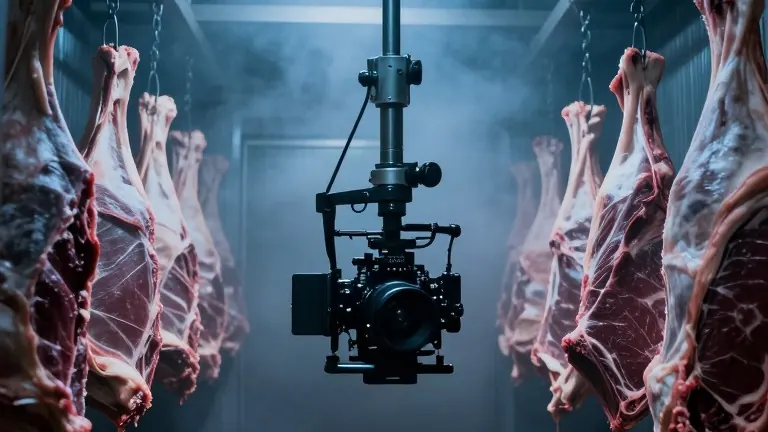
For Rocky, Brown used the Steadicam to film from inside the boxing ring and to weave through the frozen meat locker. He ran up the Philadelphia Art Museum steps alongside Sylvester Stallone. Director Peter Farrelly said Brown was smart and artistic enough to follow Stallone rather than just shooting him from a distance. Farrelly noted that Brown's smooth movements allowed the audience to feel part of the moment. Brown won an Oscar for the device in 1978.
After Rocky, Brown applied his invention to other major films. He used the Steadicam for The Shining in 1980 and Indiana Jones and the Temple of Doom. For the 1983 Star Wars film Return of the Jedi, he walked through a redwood forest at a speed slower than one frame per second. When sped up, the footage created a 100 miles per hour chase scene. He also invented the Skycam for flying shots in live sports and the Divecam for underwater filming. Brown said the device requires a skilled human operator and replicates the stable native human look.