Ex-pilot Cox says FAA ground stop forced airborne planes into complex holding patterns
Former commercial pilot John Cox explained how pilots managed communication gaps during the nationwide halt and identified three key questions for investigators.
By Olivia Barnes ·
The Federal Aviation Administration lifted its nationwide ground stop earlier today, but the incident left a complex set of operational questions for the aviation industry. John Cox, a former commercial airline pilot and safety expert, discussed the mechanics of the event in an interview this evening. He focused on how pilots managed in-flight contingencies when standard communication channels became unreliable.
Cox stated that pilots would first seek out backup frequencies and data link capabilities through systems like ACARS or CPDLC. He noted that the aviation system includes several redundancies for exactly these kinds of situations. His priority would be maintaining communication with other pilots and air traffic control despite the initial disruption.
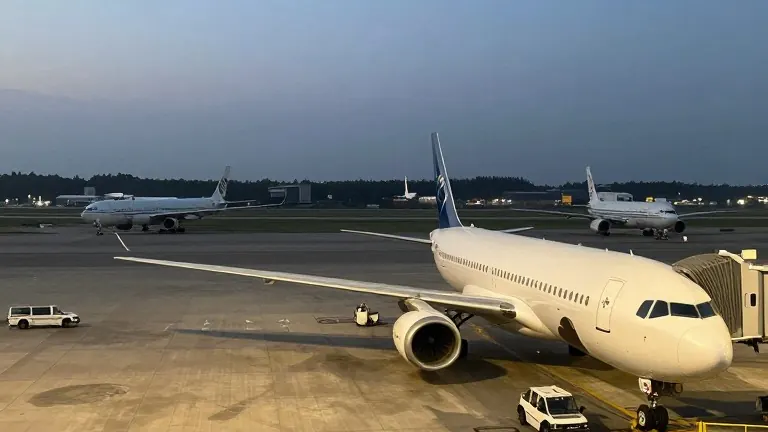
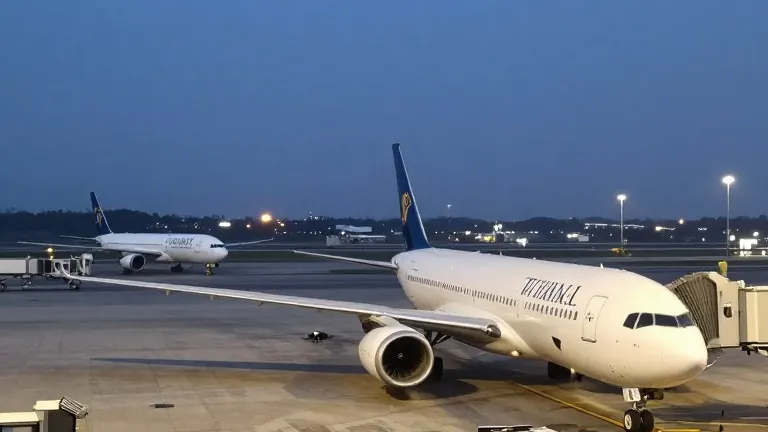
Regarding the aircraft already in the air, Cox said officials indicated those planes would continue to their destinations. He added that some airborne holding occurred at major congested airports. The primary concern was not security, but the physical ground space available to park the incoming aircraft. O'Hare and Reagan National in Washington were cited as locations with limited ground capacity.
Cox observed that the system is designed to prevent single-point failures. Yet a cascading issue emerged, affecting multiple en route traffic control centers. He said investigators would look for commonality between these centers. Specifically, they would search for shared infrastructure, such as fiber optic cable routes, that could explain how the problem proliferated.
He also questioned the decision-making process within the FAA command center. He suggested this would be reviewed as a lesson-learned exercise. His third and most pressing question concerned the method for putting the system back together.
Cox described the normal communication flow for pilots in cruise phase. He explained that contact with controllers can drop to once every 10 to 20 minutes if traffic is light. However, near busy airports, the exchange of clearances and routing changes can be constant. In those dense environments, one pilot among fifteen on a frequency may be talking to a controller continuously.
On the passenger experience, Cox said he would explain that the air traffic control system was experiencing issues. He would note that contingencies were in place and that separation from other aircraft was guaranteed by following procedures. He would ask passengers to be patient, acknowledging that the process would be slower both in the air and on the ground upon arrival.